
What Is a Wall Mounted Jib Crane?
A Wall Mounted Jib Crane is a compact lifting system fixed to a building wall or structural column. Its horizontal boom supports a hoist, which moves loads through a defined work area. The arm can swing manually or by powered rotation, depending on its design. Small footprint. Useful reach.
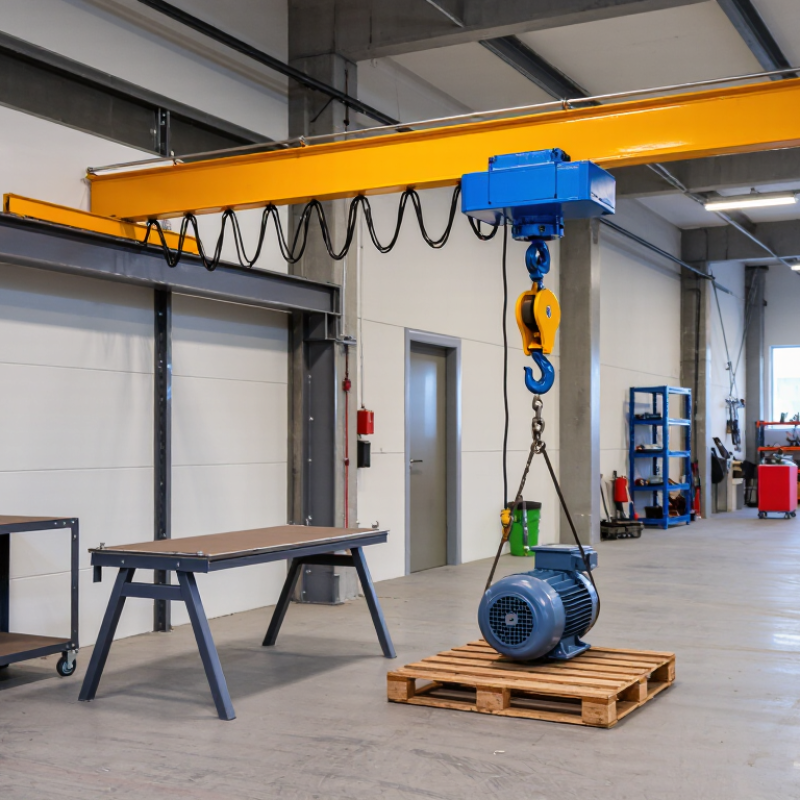
MHI’s 2024 Annual Industry Report found that 88% of surveyed professionals expected to increase supply-chain technology and innovation investment over the following two years. That figure covers supply-chain investment broadly, not jib cranes specifically. Still, it reflects growing interest in equipment that can make handling tasks more efficient. In a workshop, a wall-mounted unit may lift a motor from a pallet and position it beside a service bench, without occupying floor space with a freestanding crane.
The space-saving benefit has a trade-off. The supporting wall, column, connections, and anchors must safely carry the crane’s rated loads and operating forces. Capacity, boom reach, rotation angle, hoist travel, and usage frequency all affect suitability. Buyers should confirm structural requirements with qualified engineering professionals and follow the manufacturer’s installation and inspection guidance. A crane that fits the room may not fit the structure. That distinction is easy to overlook. This guide explains how the equipment works, where it is commonly used, and which design details deserve careful review before selection.
Definition and Main Components of a Wall-Mounted Jib Crane
A wall-mounted jib crane is a lifting system fixed to a building column or suitably reinforced wall. Its horizontal boom, called the jib, lets a hoist move loads across a defined work area. Unlike a floor-mounted crane, it usually needs no separate support column beneath the boom. That can leave floor space open for carts, tools, and operators.
The main components include a wall bracket or mast, a rotating pivot, the jib boom, and a trolley carrying the hoist. The bracket transfers lifting forces into the supporting structure; anchor bolts and the structure itself matter as much as the crane. The trolley travels along the boom, while the hoist raises and lowers the load. Stops help limit travel, and controls let the operator position the load. A compact setup can look simple. Its load path is not. Capacity, reach, rotation, and mounting details must suit the actual structure and application.
Tips: Check the mounting surface and rated capacity before use. Keep loads balanced, and avoid pulling sideways with the hoist. Listen for unusual movement or noise. Small details matter. A quick visual check is useful, but it cannot replace qualified installation and inspection.
What Is a Wall Mounted Jib Crane? - Definition and Main Components of a Wall-Mounted Jib Crane
| Item | Definition or Function | Typical Design Details | Key Considerations |
|---|---|---|---|
| Wall-mounted jib crane | A localized lifting crane attached to a building column or a suitably engineered wall structure. Its projecting arm supports a hoist and trolley for moving loads within a defined work area. | Commonly used for workstation handling, machine loading, and maintenance tasks. The crane’s reach, rated capacity, and rotation range depend on its design and supporting structure. | The supporting structure and its connections must be checked for the forces imposed by the crane, including the overturning moment created by a suspended load. |
| Wall bracket or mounting frame | Connects the crane assembly to the building structure and transfers its loads to the support. | May use top and bottom brackets, plates, and structural fasteners or engineered connections. The arrangement varies with the crane model and the building structure. | Confirm that the column or wall, fasteners, and connection details are suitable for the specified crane loads. Do not assume an ordinary wall is adequate. |
| Jib arm (boom) | The horizontal projecting member that carries the trolley and hoist. | Often made from a structural beam or fabricated steel section. The trolley travels along the arm to position the load within the permitted working radius. | Do not exceed the rated capacity or use the crane to pull loads sideways. The load must remain within the crane’s approved working area. |
| Rotation assembly | Allows the jib arm to swing around its mounting point so loads can be served at different positions. | May include pivot pins, bearings, bushings, or other purpose-designed rotating connections. Rotation range is design-dependent. | Check the specified travel limits and keep the swing path clear. Some installations restrict rotation to avoid obstacles or protect nearby equipment. |
| Tie rod or support member | Supports the jib arm in designs that use a tie-rod arrangement, helping transfer forces between the arm and the mounting assembly. | Not present on every wall-mounted jib crane; some designs use a cantilevered arm without a tie rod. | Inspect the member and its connections for looseness, damage, or visible deformation, following the manufacturer’s maintenance instructions. |
| Trolley | Travels along the jib arm and carries the hoist, allowing the suspended load to move along the arm. | May be pushed manually or moved by a powered drive, depending on the crane configuration. Wheels or rollers run on the beam’s designated track surfaces. | Check that the trolley moves smoothly and that its wheels and travel stops are in serviceable condition. |
| Hoist | Raises and lowers the load using a chain or wire rope and a lifting mechanism. | Can be manually operated or powered. The hoist is selected to suit the crane’s rated capacity, lifting height, duty, and operating requirements. | Use only within the hoist’s rated limits. Inspect the lifting medium, controls, brake, and safety devices as required by applicable procedures. |
| Hook and lifting attachment | Connects the hoist to the load or to an appropriate below-the-hook lifting device. | The hook typically includes a safety latch. Slings and other attachments must be suitable for the load and lifting arrangement. | Check for damage, excessive wear, and proper seating of the load. Never lift from the hook tip or bypass the latch. |
| End stops and travel limits | Help prevent the trolley or rotating arm from travelling beyond its intended range. | Stops and limit devices vary by crane design and may be mechanical, electrical, or both. | Keep stops in place and functional. They are not substitutes for careful operation or for the crane’s rated limits. |
| Power and controls | Provide energy and operator controls for powered hoisting, trolley travel, or rotation, where fitted. | May include a pendant control, power cable, festoon system, or other approved cable-management arrangement. | Keep cables and controls clear of the load path and inspect them for wear, damage, and reliable operation. |
Related Posts
-

7 Best Free Standing Bridge Cranes for Global Buyers
-

Innovative Solutions for Efficiently Utilizing Adjustable Gantry Cranes in Industrial Settings
-

Why Forklift Boom is Essential for Enhancing Warehouse Efficiency
-

Top Tips for Choosing the Right Lifting Beam for Your Needs?
-
China Top Forklift Boom Extension Suppliers?
-
2025 Insights: Innovative Solutions for Sourcing the Best Spreader Beam in Today’s Market