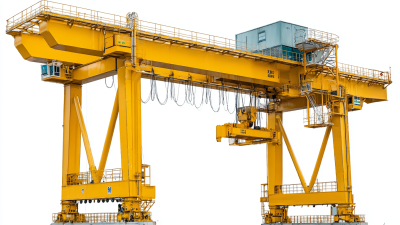
| Full Gantry Crane |
Two vertical legs support the bridge, and the legs travel on parallel rails or prepared floor tracks. |
A hoist and trolley move horizontally along the bridge while the entire crane travels longitudinally along the runway. |
Shipyards, steel fabrication areas, precast concrete yards, outdoor storage facilities, and heavy manufacturing plants. |
Provides broad lifting coverage and does not require overhead building support. |
Requires adequate ground tracks, a level foundation, and sufficient clearance for the traveling legs. |
| Semi-Gantry Crane |
One side of the bridge is supported by a floor-running leg, while the other side runs on an elevated runway attached to a building structure. |
The hoist travels across the bridge, and the crane moves along the building-side runway and floor-level rail. |
Workshops, warehouses, production lines, and facilities where one side of the operating area is beside a building wall. |
Uses floor space efficiently and can serve both indoor and outdoor work zones. |
The elevated runway and supporting structure must be designed for the wheel loads and operating forces. |
| Single-Girder Gantry Crane |
One main bridge girder spans between the supporting legs, usually with a top-running or under-running hoist arrangement. |
The trolley and hoist move along the single girder to lift, lower, and position loads within the crane’s coverage area. |
Light-duty to moderate-duty material handling, maintenance areas, workshops, and assembly operations. |
Generally has a lighter structure, lower installation cost, and reduced wheel loads. |
Capacity, span, and lifting height are more limited than those of many double-girder designs. |
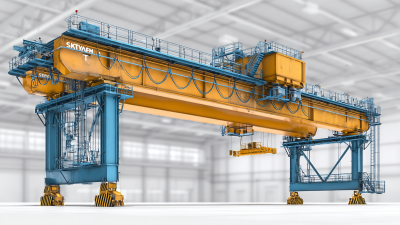
| Double-Girder Gantry Crane |
Two parallel bridge girders support a trolley that typically runs on rails positioned above the girders. |
The trolley travels across the bridge, while the crane travels along ground-level rails to cover a large rectangular work area. |
Heavy fabrication, foundries, shipbuilding, large equipment handling, and outdoor bulk-material storage. |
Offers higher lifting capacity, longer spans, greater hook height, and improved durability for demanding duties. |
Has greater structural weight, foundation requirements, and overall installation complexity. |
| Rubber-Tired Gantry Crane |
The bridge is supported by multiple rubber tires rather than fixed rails, with drive systems installed in the wheel assemblies. |
Electric, hydraulic, or diesel-electric drive systems move the crane across a paved or prepared surface; the hoist and trolley position the load. |
Container yards, precast yards, construction sites, and temporary or frequently reconfigured lifting areas. |
Can travel without permanent rails and may be repositioned between work zones. |
Ground bearing capacity, tire maintenance, steering accuracy, battery or fuel supply, and wind conditions must be considered. |
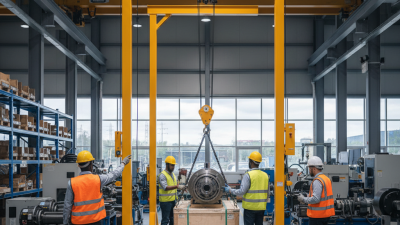
| Portable Gantry Crane |
A compact frame with wheels or casters supports a manually or electrically operated lifting device. |
The hoist raises the load, while the frame can be moved when unloaded or repositioned according to its rated design. |
Maintenance bays, workshops, machine installation, repair work, and short-term lifting tasks. |
Flexible, compact, and suitable for areas without permanent crane infrastructure. |
Capacity and span are usually lower than those of fixed gantry cranes; loads should not be moved while the crane is in motion unless specifically permitted. |
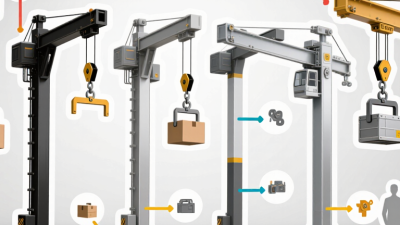
| Adjustable-Height Gantry Crane |
Telescoping legs, pinned sections, or mechanical adjustment systems allow the bridge height to be changed. |
The operator sets the frame to a suitable working height before using the hoist to lift and position the load. |
Maintenance operations, equipment installation, areas with changing clearance requirements, and multi-purpose workshops. |
Provides greater flexibility when load heights or workspace clearances vary. |
Height adjustments must be completed on a stable surface, and all pins, locks, and adjustment mechanisms must be secured before lifting. |
| Cantilever Gantry Crane |
The bridge extends beyond one or both supporting legs, creating a working area outside the main leg spacing. |
The trolley can travel into the cantilevered section, allowing loads to be picked up or set down beyond the runway legs. |
Loading platforms, rail-side handling, material transfer points, and work areas with obstructions near the support legs. |
Extends the usable lifting envelope without moving the entire crane closer to the load. |
Load capacity and allowable trolley positions may be restricted in the cantilever area because of increased structural moments. |
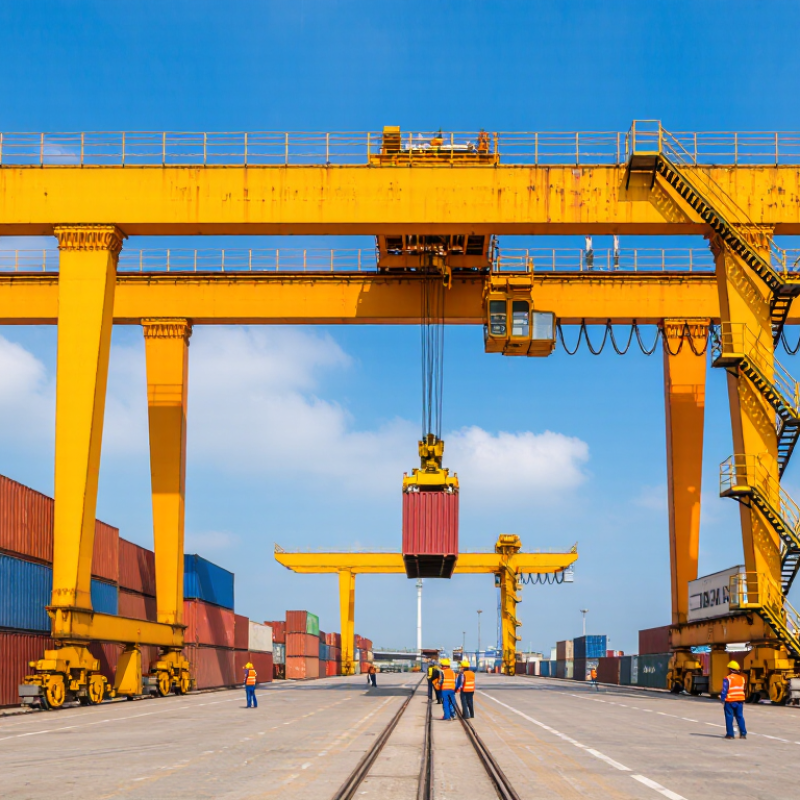
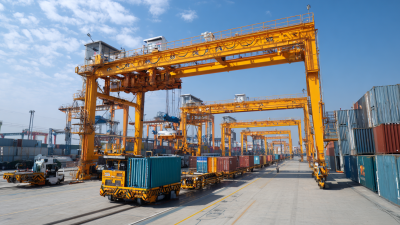
| Container Gantry Crane |
A wide-span gantry frame is designed to straddle rows of containers, with a spreader or specialized lifting attachment suspended from the trolley. |
The crane travels along designated lanes, while the trolley and spreader move containers vertically and horizontally for stacking or transfer. |
Intermodal terminals, container yards, rail transfer facilities, and port-related logistics operations. |
Enables organized high-volume container handling across multiple storage rows. |
Requires accurate travel lanes, reliable positioning controls, adequate pavement strength, and operating procedures for wind and traffic conditions. |
| Lifting Mechanism |
Usually consists of an electric motor, gearbox, drum or chain system, wire rope or chain, hook block, and braking equipment. |
The motor drives the hoisting mechanism to raise or lower the load; brakes hold the load when motion stops. |
All gantry crane types that use powered or manual lifting equipment. |
Converts mechanical or electrical power into controlled vertical load movement. |
The rated load, duty cycle, rope condition, hook condition, brake performance, and overload protection must match the crane design. |
| Travel and Control System |
Includes bridge-travel drives, trolley-travel drives, wheels, rails or tires, electrical controls, limit switches, and emergency-stop devices. |
Operators use pendant controls, radio controls, or a cabin to coordinate hoisting, trolley travel, and bridge travel. |
Applicable to fixed-rail, rubber-tired, portable, and specialized gantry crane systems. |
Allows precise positioning and coordinated movement within the designated operating envelope. |
Travel paths should remain clear, controls should be tested regularly, and operating speed should be appropriate for the load and environment. |