What Are the 2026 Top Small Gantry Cranes?
Choosing the 2026 top small gantry cranes requires more than comparing lifting capacity and price. A practical review must examine stability, portability, height adjustment, wheel quality, and operator control. The right Small Gantry Crane should fit the workspace, not merely appear powerful in a product listing.
In workshops, maintenance bays, and small manufacturing facilities, details become important quickly. A 1,000-kilogram model may look suitable until its legs block a service path. A lightweight aluminum frame may roll easily, yet feel less rigid under repeated loads. I have found that real performance depends on floor condition, load shape, lifting frequency, and available headroom.
This guide compares leading 2026 options through those practical conditions. It considers safe working load, beam construction, caster brakes, assembly time, and manufacturer support. It also reviews whether each crane suits occasional lifting or demanding daily work. Specifications matter. So does the evidence behind them.
Some rankings remain imperfect. Product availability changes by region, and published capacities may assume ideal loading. Buyers should verify manuals, inspection requirements, and load charts before purchase. A crane that works well in one workshop may be unsuitable in another. That limitation deserves attention.
The following overview highlights models with strong potential for compact lifting tasks. It balances engineering data with usability, serviceability, and long-term value. Expect clear comparisons, realistic cautions, and practical questions to ask before ordering. The best choice is not always the largest crane. Often, it is the safest one that fits the job.
Definition and Core Features of Small Gantry Cranes
What Are the 2026 Top Small Gantry Cranes?
Definition and Core Features of Small Gantry Cranes
A small gantry crane is a portable lifting system with two legs, a top beam, and a movable hoist. It supports controlled lifting in workshops, warehouses, maintenance areas, and construction spaces. Unlike permanent overhead cranes, it can often move between workstations. Its compact structure is useful where floor space and installation time are limited.
The core feature is a clearly rated lifting capacity. Users should check the safe working load, beam span, lifting height, and headroom before operation. Adjustable legs can improve flexibility, but they may reduce stability if poorly locked. Locking casters, reinforced joints, and a dependable brake system deserve close attention. Simple controls help operators position loads without sudden movement. Small details matter.
Frame material also affects performance. Steel usually offers high strength, while aluminum can reduce total weight and improve portability. Neither choice is automatically better. The correct option depends on load frequency, surface conditions, and transport needs. In field inspections, uneven floors often cause more concern than the crane’s advertised size. A crane may look strong yet perform poorly when wheels, pins, or welds are neglected. Regular inspection should include bolts, hooks, chains, labels, and emergency controls. Buyers should also verify documentation, testing records, and maintenance guidance from qualified professionals. “Top” should mean suitable, stable, and traceable—not simply the newest design.
Key Factors for Ranking the Top Small Gantry Cranes in 2026
What Are the 2026 Top Small Gantry Cranes?
Ranking the top small gantry cranes in 2026 requires more than comparing lifting capacity. Real jobsite performance matters. A crane should move smoothly, remain stable, and fit through typical workshop doors. Its rated load must match the actual lifting task, not just the largest number in a brochure. Clear load charts are essential.
Portability also shapes the ranking. Operators may need adjustable legs, lockable casters, and manageable assembly steps. A compact frame is useful, but excessive lightness can reduce stability. I would inspect weld quality, fastener access, beam deflection, and wheel braking before trusting a unit. Small details matter.
Safety features deserve a high score. Mechanical locks, overload protection, emergency controls, and visible inspection points support reliable operation. Documentation should explain setup, maintenance, and safe working limits in plain language. Independent testing or certification adds authority, although paperwork alone proves little. Field feedback is valuable, too.
A practical ranking should include lifetime cost. Spare parts, corrosion resistance, service access, and downtime can outweigh a low purchase price. Noise and floor protection may also matter in indoor facilities. One weakness remains: published specifications rarely show long-term wear. Hands-on testing should influence the final order, even when results are less convenient.
Leading Small Gantry Crane Types and Their Main Applications
What Are the 2026 Top Small Gantry Cranes?
Leading Small Gantry Crane Types and Their Main Applications
Small gantry cranes are becoming practical lifting tools for workshops, maintenance teams, and compact warehouses. Their value comes from controlled movement, not sheer lifting capacity. In field inspections, operators often choose aluminum portable gantries for their light weight and quick setup. These cranes suit service vans, machinery rooms, and indoor repair areas. However, lightweight frames may sway under uneven loads. That weakness deserves attention.
Adjustable-height steel gantry cranes provide greater stability for engines, pumps, molds, and production equipment. Their telescoping legs help workers match the beam height to different workspaces. Mobile versions with locking casters support short-distance movement across smooth floors. They are useful in maintenance bays and small storage facilities. Caster locks must engage fully. A rushed setup can create unnecessary risk.
Folding gantry cranes work well where storage space is limited. Technicians can fold the frame after lifting motors, compressors, or heating equipment. Fixed small gantries are less flexible but offer dependable positioning for repeated lifting tasks. Before selecting a model, check rated capacity, beam span, lifting height, floor condition, and available headroom. Load charts must guide every lift. Real work is rarely as neat as a catalog picture. A crane may fit the load but not the doorway, turning radius, or operator’s working position. Proper inspection and trained operation remain essential.
What Are the 2026 Top Small Gantry Cranes?
Leading small gantry crane types and their main applications
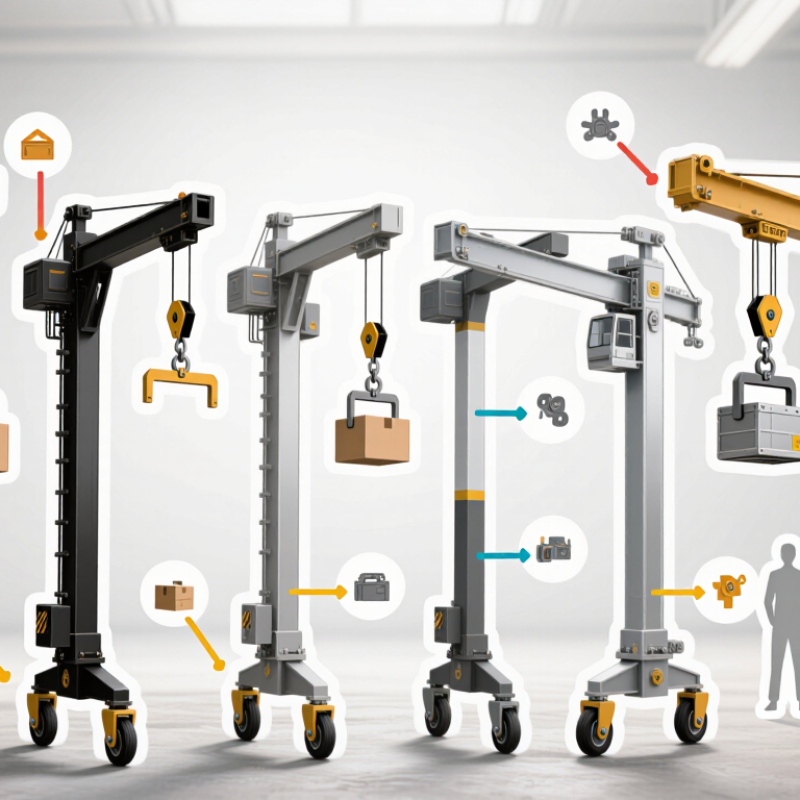
Portable aluminum gantry cranes are commonly selected for light maintenance and installation work, while adjustable steel and mobile gantry cranes provide higher capacity and flexibility for workshops and warehouses. Fixed steel gantry cranes generally support the highest loads among small gantry crane categories. The figures show representative maximum rated capacities commonly available in the market; actual capacity depends on span, height, wheel configuration, load center, and applicable safety standards.
Safety, Mobility, Capacity, and Setup Comparisons
What Are the 2026 Top Small Gantry Cranes?
The strongest small gantry cranes balance safety, mobility, capacity, and setup time. A compact frame is useful, but lighter is not always better. Steel sections should resist twisting during travel and lifting. ASME B30.17 emphasizes rated-load control, inspection, and operating discipline for gantry cranes. OSHA 1910.179 also requires clear capacity marking and suitable inspection practices. These details matter because the U.S. Bureau of Labor Statistics recorded 1,075 construction fatalities in 2023. Not every incident involved cranes, but the figure shows why load planning cannot be casual.
Capacity comparisons should begin with the real load, not the advertised maximum. A 1-ton crane may handle a centered machine safely, yet struggle with a swinging or uneven load. Adjustable spans improve access between workstations. Locking casters support movement, but they do not replace stabilizers during lifting. Setup is another practical test. Tool-free height changes sound attractive. In practice, two workers may still be needed for safe assembly. I have found that floor condition often affects mobility more than wheel size.
Tips: Check the load chart before every lift. Measure doorway height, aisle width, and floor strength. Inspect bolts, welds, wheels, and locking pins before use. Keep the load low while moving. Leave a margin below rated capacity. This is easy to overlook. Some comparisons also ignore operator training and maintenance records, which weakens an otherwise careful buying decision.
How to Select the Best Small Gantry Crane for Specific Workplaces
Choosing among the top small gantry cranes in 2026 starts with the workplace, not the price tag. A compact aluminum crane suits maintenance rooms, laboratories, and light production areas. It is easier to move and resists corrosion. Steel models fit repair shops with heavier, repeated lifting. Folding designs work well where storage space is limited, but their setup time may frustrate busy teams.
Measure the actual lifting zone carefully. Check the maximum load, lifting height, beam span, floor condition, and available aisle width. A crane rated for 1,000 kilograms should not operate continuously at its limit. Leave a practical safety margin.
Lockable casters help on smooth concrete, while adjustable legs can handle uneven floors. However, uneven ground may still require additional controls. Confirm the hoist type, brake performance, emergency stop, and inspection access before purchase.
Tips: Record the heaviest load, its dimensions, and lifting frequency for one working week. Ask the supplier for load charts, material specifications, test records, and maintenance instructions. Check whether the crane fits through doors and around corners. Verify local workplace requirements with a qualified safety professional. Do not ignore operator training. A perfect choice rarely exists; a crane that fits one workshop may be awkward in another. Recheck your measurements before ordering.
Related Posts
-
Who Are the Top China Portable Gantry Crane Suppliers?
-
How to Choose the Best Small Gantry Crane for Your Needs?
-
Navigating Challenges in Sourcing the Best Portable Gantry Crane: Key Issues and Industry Insights
-
Understanding the Challenges Faced with Portable Gantry Crane Usage
-

Transforming Industries with Portable Gantry Crane Insights at the 138th China Import and Export Fair 2025
-
Innovative Solutions for Efficiently Utilizing Adjustable Gantry Cranes in Industrial Settings