
What Is a Wire Winder and How Does It Work?
A Wire Winder is a machine designed to wrap wire around a spool, coil former, or custom fixture. It controls winding speed, wire tension, spacing, and rotation. These details determine whether the finished coil performs reliably.
“Consistent tension matters more than impressive speed,” says Michael J. McCoy, a wire-winding engineer familiar with precision coil production. His observation reflects a common workshop reality. A fast machine can still produce poor results. Loose turns may shift. Excessive tension may stretch or damage delicate insulation.
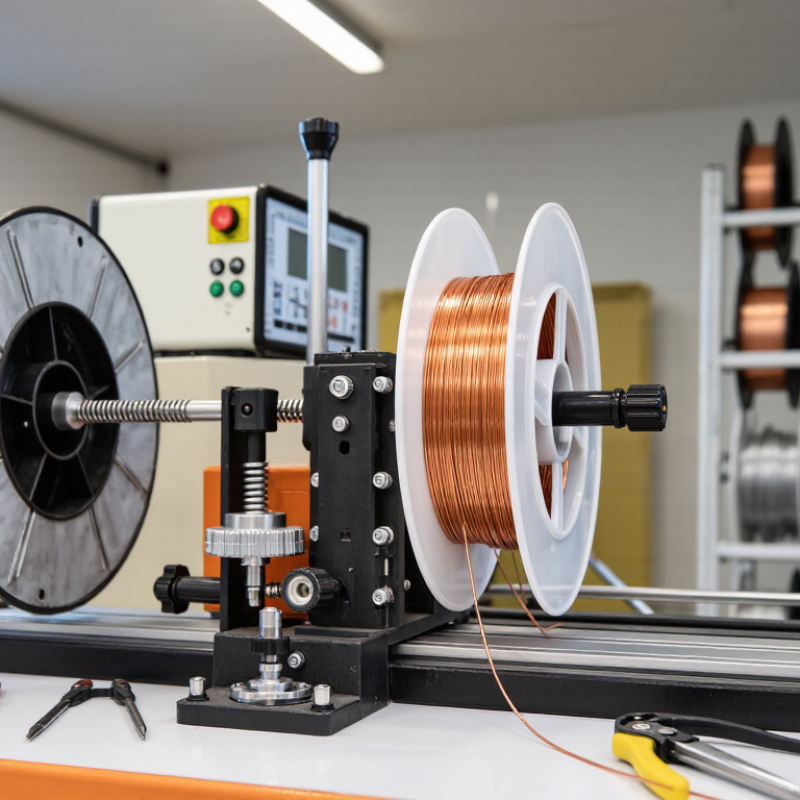
A Wire Winder usually combines a rotating spindle, a wire guide, a tensioning system, and programmable controls. The spindle turns the coil form. The guide moves across its surface. Together, they place each turn in a controlled pattern. Operators may adjust speed, pitch, turn count, and stopping position.
The process looks simple.
It is not always simple.
Wire diameter, insulation thickness, spool shape, and material flexibility can change the result. Copper wire may settle differently from aluminum wire. Fine magnet wire can break under surprisingly small tension. Even dust near the guide can affect placement.
This article examines how a Wire Winder works, where it is used, and which factors influence winding quality. It also considers practical limitations that machine descriptions often overlook. A reliable result requires more than pressing “start.” Careful setup, inspection, and occasional adjustment remain essential.
Definition and Core Purpose of a Wire Winder
A wire winder is a machine or hand-operated tool that coils wire onto a reel, spool, or drum. Its core purpose is controlled storage and handling. The device guides the wire while maintaining steady tension. This prevents loose loops, sharp bends, and tangled layers.
A typical winder includes a rotating take-up reel, tension control, and a traversing guide. The guide moves sideways as the reel turns. This creates even layers across the spool.
The need for reliable winding is growing with cable production. Grand View Research estimated the global wire and cable market at over USD 220 billion in 2023. Its report also projects continued growth through 2030. Fortune Business Insights reported similar expansion in the cable market. These figures show why consistent winding affects productivity, material protection, and inspection quality.
In practical use, a poorly adjusted winder can crush insulation near the flange. It may also create hidden crossovers. I have found that “faster” winding is not always better. That assumption deserves review.
Tips:
Match reel speed to wire diameter and insulation type. Check tension with a calibrated gauge when possible. Keep the guide aligned with the reel center. Inspect the first and final layers by hand. Small errors become obvious later. Record settings for repeat jobs, but do not trust old settings blindly. Humidity, temperature, and batch differences can change wire behavior. One useful check is simple: stop the machine and examine the coil surface. A smooth pattern usually indicates stable tension.
Main Components and Their Functions
What Is a Wire Winder and How Does It Work?
Main Components and Their Functions
A wire winder wraps wire around a spool, core, or shaped former with controlled tension. Its frame supports the winding head, motor, guides, and control system. Grand View Research valued the global wire and cable market at approximately US$205.5 billion in 2023. That scale increases demand for repeatable winding equipment.
The motor supplies rotational power to the spindle. The spindle holds the core and keeps it centered during operation. A tension controller applies steady pulling force to the wire. Without it, loose loops or stretched insulation may appear. The guide carriage moves sideways and distributes each turn across the core. Its travel speed must match spindle speed. Small errors become visible at the edges.
Sensors monitor rotation, wire presence, and position. The controller uses these signals to adjust speed or stop the machine. According to MarketsandMarkets, automation remains a major factor in modern wire and cable production. In practical use, operators still check the first layers by hand. That step is easy to underestimate. A sensor can detect movement, but it may not judge a poorly seated turn. Core size, wire diameter, insulation stiffness, and acceleration all affect the result. Some settings work well on paper, yet fail during a cold morning shift. Careful testing remains necessary.
How a Wire Winder Operates Step by Step
What Is a Wire Winder and How Does It Work?
A wire winder is a machine that coils wire onto a spool, reel, or shaped core. It controls tension, speed, and winding position during operation. The process begins when an operator places an empty reel on the spindle. The spindle then holds the reel firmly and rotates at a selected speed.
The wire passes through a guide, tension control, and alignment point. The tension unit applies steady resistance, preventing loose loops or excessive stretching. The guide moves from side to side as the reel turns. This motion creates even layers across the reel surface. Sensors may monitor rotation, wire position, and reel diameter. If the wire shifts, the controller can reduce speed or stop the machine.
The operator usually sets the wire size, target length, winding speed, and layer pattern. A slow trial run checks whether the wire sits correctly. This step matters more than it seems. During routine equipment checks, uneven edges often reveal incorrect tension or guide timing. The machine stops when the target length or reel capacity is reached. The finished coil is secured and removed for inspection.
Small errors can remain hidden.
A practical check should examine the wire surface, layer tightness, and reel edges. No setup is perfect. Temperature, wire flexibility, and spool condition can change the result, so experienced operators adjust settings rather than trusting fixed numbers.
What Is a Wire Winder and How Does It Work? — How a Wire Winder Operates Step by Step
| Step | Operating Stage | What Happens | Main Components Involved | Typical Control or Data Dimension | Result |
|---|---|---|---|---|---|
| 1 | Load the Empty Spool | The empty spool or reel is placed on the winding shaft and secured so it can rotate without slipping. | Winding shaft, chuck, reel supports, locking mechanism | Spool width, core diameter, maximum permitted reel diameter, shaft alignment | The reel is centered and ready for controlled rotation. |
| 2 | Feed the Wire | Wire is guided from a payoff reel, container, or upstream process toward the winding area. | Payoff unit, inlet guide, rollers, wire straightener | Wire diameter, feed direction, guide alignment, material condition | The wire enters the machine along a stable path. |
| 3 | Set the Tension | A tension device applies a controlled pulling force to keep the wire tight without stretching, flattening, or damaging it. | Brake, dancer arm, tension rollers, load cell or tension sensor | Target tension, tension stability, wire strength, permissible elongation | The wire remains taut and consistent during winding. |
| 4 | Thread the Wire | The wire is passed through the guides and attached to the spool using a starter hole, slot, clamp, or other approved method. | Guide eyelet, threading path, spool attachment point | Threading route, attachment security, minimum bend radius | The wire is connected to the reel and prepared for the first layer. |
| 5 | Start Spool Rotation | The drive motor accelerates the winding shaft gradually to the selected operating speed. | Motor, drive controller, shaft, speed sensor | Rotational speed, acceleration rate, direction of rotation | The spool begins winding while reducing the risk of wire shock or slack. |
| 6 | Traverse the Wire | A traverse guide moves the wire side to side across the reel width, distributing each turn evenly. | Traverse carriage, lead screw or linear actuator, guide nozzle | Traverse speed, pitch, stroke length, winding pattern | Adjacent turns are placed in an orderly pattern instead of collecting in one area. |
| 7 | Build Successive Layers | As the reel fills, each new layer is wound over the previous layer while the guide continues to maintain the selected pattern. | Winding shaft, traverse system, tension control, diameter sensor | Layer thickness, winding pitch, reel fill diameter, traverse synchronization | The wire forms a compact and stable coil on the spool. |
| 8 | Adjust for Increasing Diameter | The reel diameter increases during winding, so the control system may reduce shaft speed to maintain the required linear wire speed. | Controller, encoder, diameter sensor, motor drive | Linear wire speed, reel diameter, torque, rotational speed | Winding conditions remain consistent from the first layer to the final layer. |
| 9 | Monitor the Winding Process | Sensors and the operator check for wire breaks, excessive tension, poor alignment, loose turns, or an overfilled reel. | Break detector, tension monitor, limit switch, control panel | Tension deviation, wire-break status, reel diameter, run time | Abnormal conditions can trigger an alarm, slowdown, or automatic stop. |
| 10 | Stop and Secure the Coil | The machine decelerates, the wire is cut or secured, and the finished coil is protected from unwinding. | Drive system, cutter, clamp, end-of-cycle control, reel lock | Stop position, finished length or mass, final reel diameter, end securing method | A completed reel is ready for removal, inspection, storage, or the next process. |
Operating values are application-dependent. Wire diameter, material, tensile strength, reel dimensions, winding pattern, target tension, and required production speed must be matched to the specific wire and spool design.
Different Types and Common Applications
What Is a Wire Winder and How Does It Work?
A wire winder wraps wire around a spool, bobbin, or shaped core. The machine controls rotation, tension, and wire position during winding. A guide moves across the core while a motor turns it steadily. This creates even layers and reduces tangles, bends, and wasted material.
Different types suit different working conditions. Manual winders are simple and useful for repairs, prototypes, and low-volume electrical coils. Benchtop models offer better speed control for workshops and small production lines. Automatic winders use sensors and programmable settings for repeated coil sizes. CNC winding systems provide accurate patterns for motors, transformers, solenoids, and precision inductors. Some machines also include tension controls, wire counters, and automatic cutting features.
Applications vary widely. Electrical manufacturers wind copper wire onto bobbins for motors and transformers. Cable processors use take-up winders to collect long wire without damaging insulation. Small fabrication teams may wind heating elements or custom coils. Packaging operations can handle fine wire, thread-like conductors, and other flexible materials. The correct machine depends on wire diameter, insulation strength, spool size, and required output.
Uneven tension remains a common problem. Too much force may stretch or break thin wire. Too little force can create loose layers. No setup is perfect. Operators sometimes need to adjust speed after checking the first finished coil, because real materials rarely behave exactly like specifications.
What Is a Wire Winder and How Does It Work?
A wire winder guides and tensions wire while rotating it around a spool, bobbin, or core to create an organized coil.
Hand-operated systems used for prototypes, repairs, and low-volume coils.
Programmable machines that control rotation, traverse movement, and wire tension.
Motor windings, transformer coils, inductors, solenoids, relays, and ignition coils.
The chart shows standard nominal conductor diameters for selected American Wire Gauge (AWG) sizes commonly used in electrical winding work. Smaller AWG numbers represent thicker wire, while larger AWG numbers represent thinner wire. Actual coil selection also depends on insulation, current, voltage, winding space, and thermal requirements.
Key Factors for Safe and Efficient Wire Winding
What Is a Wire Winder and How Does It Work?
Key Factors for Safe and Efficient Wire Winding
A wire winder gathers and coils wire around a spool, drum, or custom reel. Its motor rotates the reel while guides control the wire’s position. Tension remains steady through sensors, brakes, or adjustable mechanical controls. This prevents loose loops, crushed insulation, and uneven layers.
Safe winding starts with the correct wire size, reel diameter, and winding speed. Check the wire for cuts, flattened sections, or exposed conductors before operation. Keep hands away from rotating parts, and use guards whenever they are provided. Secure the reel firmly, because a small wobble can become a dangerous swing. Wear eye protection and fitted work clothing. Loose sleeves are a real hazard.
Efficient winding also depends on alignment. The guide should travel smoothly across the reel without sudden jumps. Set moderate tension first, then adjust after observing the first few layers. Excessive tension may stretch the conductor or damage insulation. Low tension creates gaps and unstable coils. Measure the finished coil when accuracy matters, rather than trusting appearance alone. In practical work, the first setup is rarely perfect. Stop, inspect, and correct it. A clean winding pattern saves storage space and makes later dispensing easier.
