
Why Choose a Liquid Ring Compressor?

Choosing a compressor is not only a question of pressure and flow. Gas moisture, temperature, and contamination can change how reliably a system runs. A Liquid Ring Compressor is worth considering when the process gas is wet, saturated, or carries condensable vapors, provided the machine is designed for those conditions. Its impeller rotates inside a casing, while a sealing liquid forms a moving ring. This creates compression chambers without metal-to-metal contact between the impeller and casing. The detail is practical: droplets entering a dry machine may cause trouble, while a liquid-ring design can tolerate some wet service. Not every gas is suitable.

Energy use deserves equal attention. The U.S. Department of Energy’s Improving Compressed Air System Performance: A Sourcebook for Industry identifies compressed air as a significant industrial energy load, often estimated at about 10% of industrial electricity use. That figure describes compressed-air systems broadly, not liquid-ring machines specifically; actual plant demand varies. It is a useful reminder to compare operating power, cooling needs, liquid consumption, and maintenance—not purchase price alone.

The best choice depends on the process. Check gas composition, discharge pressure, liquid compatibility, and expected operating hours with a qualified supplier. Ask for performance data at your actual conditions, not just a catalog rating. Small details matter. A liquid-ring unit may offer stable handling in demanding wet-gas service, but it may be inefficient or unsuitable elsewhere. That trade-off deserves an honest review before selection.
Why Choose a Liquid Ring Compressor?

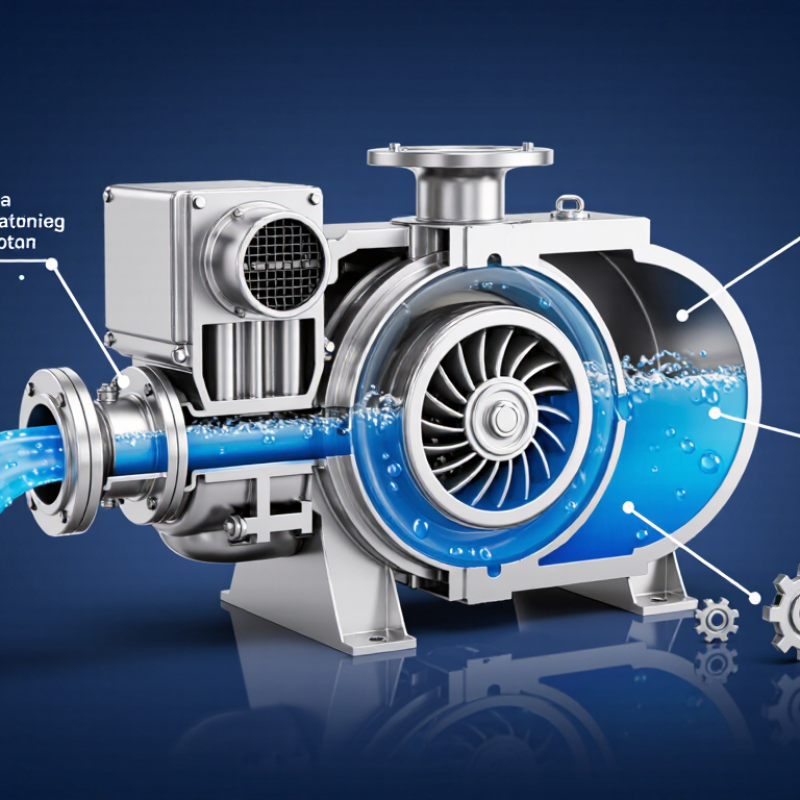
How an Eccentric Impeller Forms a Liquid Ring to Compress Gas

An eccentric impeller sits off-center inside a casing. As it spins, centrifugal force pushes sealing liquid outward into a rotating ring. The ring’s inner surface shifts relative to the impeller, so the spaces between its blades grow near the inlet and shrink near the discharge. Gas enters expanding spaces, becomes trapped, and is compressed as those spaces contract. Then it leaves through the discharge port.

That motion matters. The liquid also seals clearances and absorbs heat, helping limit gas-temperature rise. API Standard 681 covers liquid ring vacuum pumps and compressors used in process industries, where gas composition and operating conditions shape equipment selection.

The design can suit humid or vapor-laden streams because liquid contact helps manage moisture and carryover. But liquid choice, temperature, and flow need attention; a poor match can reduce capacity or increase liquid consumption.

A useful seal. A real trade-off.

The U.S. Department of Energy’s Improving Compressed Air System Performance sourcebook reports that compressed air can account for about 10% of industrial electricity use. That figure is not specific to liquid ring machines, but it makes system-level efficiency worth checking.

Compare inlet conditions, discharge pressure, and liquid handling in actual service—not just the compressor’s nameplate. I would also verify performance at the expected operating point; selection based on a single ideal condition can miss the messy part.

Operating Range: Some Designs Reach Discharge Pressures Near 10 bar(a)

Some liquid ring compressor designs can reach discharge pressures near 10 bar(a), but this is not a universal rating. The “a” means absolute pressure: at sea level, 10 bar(a) is roughly 9 bar above atmospheric pressure. Details matter. The achievable pressure depends on the machine’s design, operating speed, sealing liquid, and gas conditions.

For a process engineer, the useful question is not just the maximum pressure. Check the required flow at the actual discharge pressure, along with inlet pressure and gas composition. A compressor may deliver less gas as pressure rises. Warmer sealing liquid can also affect performance, so a quoted operating point should be reviewed against expected liquid temperature and cooling capacity.

Liquid ring compression can suit gases that are wet or contain some condensable vapour, since the sealing liquid helps form the compression chambers. Still, compatibility needs careful checking. The gas and liquid must not react, and the liquid should not cause unacceptable contamination or corrosion. Near 10 bar(a), confirm pressure limits for the compressor, piping, seals, and downstream equipment. A datasheet number alone is easy to overread; ask for a performance curve at your specific conditions, even if those conditions seem routine.

Near-Isothermal Compression Keeps Gas Temperature Close to Seal-Liquid Temperature

Why Choose a Liquid Ring Compressor?

A liquid ring compressor uses seal liquid to form a moving ring inside its casing. As the impeller turns, gas is trapped and compressed in the spaces between the blades. Heat transfers from the gas into the liquid, keeping gas temperature close to the seal-liquid temperature. This near-isothermal behavior can help limit discharge-temperature spikes. It is not magic, and compression is never perfectly isothermal. If the seal liquid heats up, the gas temperature can rise with it.

Temperature control matters in energy-intensive plants. The International Energy Agency’s Energy Efficiency 2023 report estimates that industry accounted for about 37% of global final energy consumption in 2022. That figure is not specific to compressors, but it highlights the value of monitoring process loads. During steady operation, compare suction and discharge gas temperatures with seal-liquid inlet and outlet temperatures. A gradual rise in liquid temperature may explain a warmer discharge, even when other readings look stable.

Tips: Log temperatures at consistent operating conditions. Check liquid flow and cooling performance before changing compressor settings. Small trends matter.

Why Choose a Liquid Ring Compressor?

Near-isothermal compression keeps gas temperature close to the seal-liquid temperature.

Illustrative comparison for air entering at 25°C with seal liquid near 30°C. The dry-compression line is an ideal adiabatic reference (air, γ = 1.4); actual temperatures depend on operating conditions. Liquid-ring compression transfers heat to the seal liquid, helping limit gas-temperature rise.

Wet-Gas Service: Liquid Rings Tolerate Entrained Liquids and Process Contaminants

A liquid ring compressor can suit wet-gas service because its compression chamber contains a moving ring of seal liquid. Gas enters the chamber, and the rotating impeller changes its volume as it turns. Entrained droplets can travel through the machine with the gas, rather than immediately threatening dry-running surfaces. That matters. The liquid also helps absorb heat during compression, which can be useful when gas composition or moisture levels vary.

Still, limits matter. Tolerance depends on the liquid, materials, temperature, and amount of carryover. A properly sized separator can remove excess liquid from the discharge, while compatible seal liquid helps manage contamination and heat. Abrasive solids, corrosive compounds, or deposits may still cause wear or upset performance. Operators should check seal-liquid condition, separator drains, and discharge temperature as part of routine monitoring. In practice, the gas stream may change more than expected. A compressor that handles occasional droplets may not be suitable for a steady stream of liquid or heavy solids. Reviewing process samples and operating conditions before selection helps prevent that mismatch.

Selection Criteria: API 681, Seal-Liquid Vapor Pressure, and Gas Compatibility

Why Choose a Liquid Ring Compressor?

Selection Criteria: API 681, Seal-Liquid Vapor Pressure, and Gas Compatibility

A liquid ring compressor suits gas streams that are wet, dirty, or prone to condensation. Its rotating impeller traps gas in liquid-filled cells, offering a steady compression process with few hot spots. Selection still depends on the duty, not just the machine type. API Standard 681 covers liquid ring vacuum pumps and compressors for petroleum, chemical, and gas industry services. Use the applicable project specification to define materials, performance guarantees, inspection, and testing.

Seal-liquid vapor pressure can limit capacity and achievable suction pressure. NIST Chemistry WebBook data gives water vapor pressure as about 2.34 kPa absolute at 20°C, rising to 7.38 kPa at 40°C. That rise matters: warmer seal liquid adds vapor to the gas load. Check operating temperature, suction pressure, and the liquid’s vapor pressure together. Gas compatibility also needs a close review. Consider absorption, corrosion, and any reaction between the gas, seal liquid, and wetted materials. A neat datasheet match can still miss changing feed composition.

Tips: Ask for performance data at the actual seal-liquid temperature and gas composition. Check startup and upset conditions, too. Small assumptions matter here; I would verify them before finalizing the selection.