What Are the Top Types of High Silicon Steel?
High Silicon Steel is valued for its low core loss, high electrical resistance, and useful magnetic performance. But “top type” depends on the job. A transformer core, a motor stator, and a precision magnetic component do not face identical demands. Silicon content matters, but so do sheet thickness, grain structure, coating, and manufacturing route.
Magnetics researcher David Jiles’s work offers a useful guiding idea: choose magnetic materials by the task they must perform, not by one property alone. This is a paraphrase, not a direct quotation. In this guide, the main categories are distinguished by silicon level and magnetic orientation. Conventional electrical steel, often containing roughly 2–3.5% silicon, balances magnetic performance with easier processing. Higher-silicon grades can reduce losses further, while 6.5% silicon steel offers especially high resistivity and low magnetostriction. The trade-off is real. It can be brittle, making rolling and forming more difficult.
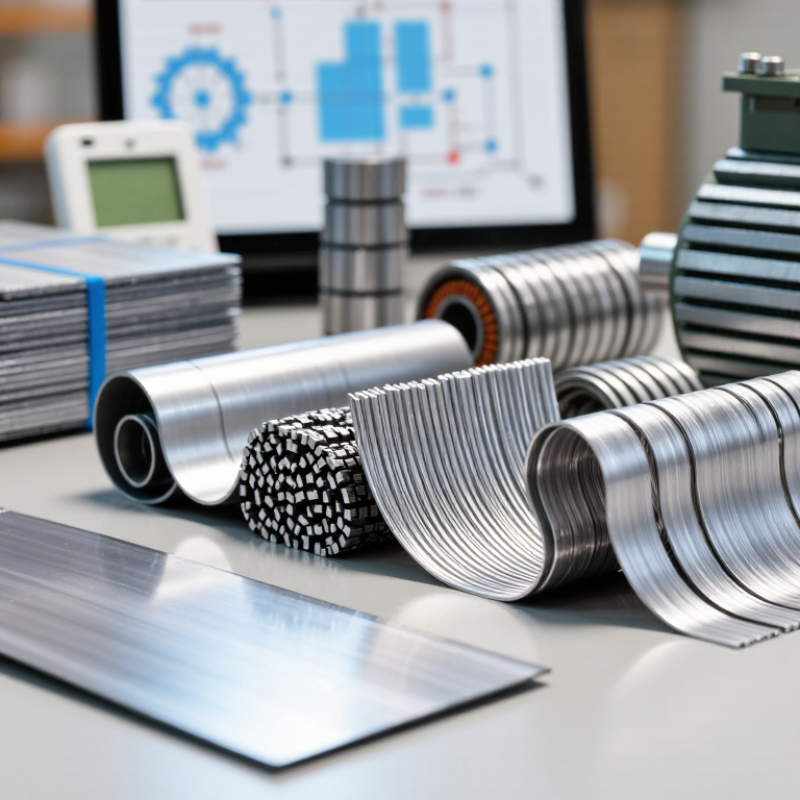
A thin strip can look unremarkable on a bench. Its behavior inside a humming motor may be decisive. The guide will compare these grades, explain where grain-oriented and non-oriented products fit, and outline practical selection factors. One caution: category names are not always used consistently across suppliers. That makes datasheets worth reading closely, especially for silicon content, thickness, and loss figures. No single grade wins every application.
How High-Silicon Steel Is Classified
High-silicon steel is classified by silicon content, magnetic orientation, and delivery form; “high-silicon” is not one universal grade. Conventional electrical steels commonly contain roughly 2–3.5% silicon by weight. A technical review by A. J. Moses in IEE Proceedings, 1990, identifies 6.5% silicon iron as a high-silicon composition. More silicon increases electrical resistivity, helping limit eddy-current loss in alternating magnetic fields. It also makes the sheet less ductile. That matters in practice.
A second classification separates non-oriented and grain-oriented material. Non-oriented grades have magnetic properties suited to flux moving in several directions, as in rotating machine cores. Grain-oriented grades are processed for easier magnetization along a preferred rolling direction, making them useful in transformer cores. IEC 60404-8-4 and IEC 60404-8-7 specify requirements for these respective product families. The standards classify electrical steel by magnetic performance and product condition, not silicon percentage alone. A 6.5% alloy may offer lower magnetostriction, but handling and forming become harder. The boundary is not perfectly simple: chemistry, texture, thickness, and annealing all affect performance.
Grain-Oriented High-Silicon Steel
Grain-oriented high-silicon steel is engineered to carry magnetic flux especially well in one direction, usually along the sheet’s rolling direction. Its silicon content raises electrical resistance, helping limit eddy-current losses as magnetic fields change. Carefully controlled processing also creates a preferred grain structure, so the steel performs best when flux follows that direction.
That alignment matters in transformer cores. Thin, coated sheets are stacked into a core, with each layer helping restrict circulating currents. In a well-designed transformer, the rolling direction can follow the main magnetic path, reducing energy loss and unwanted heating. The material also tends to magnetize with less effort along its preferred direction. Small details count: cutting, joints, and assembly can disturb the flux path. The ideal diagram is tidy; real cores are less obedient.
Grain-oriented steel is not equally useful in every application. Motors often experience magnetic fields that change direction across the component, making a strongly directional sheet less convenient. Engineers compare core loss, thickness, coating, and operating frequency before choosing a grade. Test data should match the intended conditions. A specification alone can mislead.
What Are the Top Types of High Silicon Steel? - Grain-Oriented High-Silicon Steel
| Type | Typical Silicon Content | Key Characteristics | Common Applications |
| Conventional grain-oriented electrical steel (CGO) | Typically around 3% by weight; exact composition varies by grade. | Processed to develop a strong grain orientation, so magnetic properties are best along the rolling direction. Used where flux follows a defined path. | Power and distribution transformer cores; some other magnetic-core applications. |
| High-permeability grain-oriented steel | Usually close to the silicon level of conventional grain-oriented steel; grade specifications differ. | A sharper preferred grain orientation can provide higher permeability and lower core loss under specified test conditions. Performance depends on thickness, magnetic induction, and processing. | Efficient transformer cores, particularly where reduced core loss is important. |
| Domain-refined grain-oriented steel | Generally within the range used for grain-oriented electrical steel; domain refinement does not define a separate silicon percentage. | Magnetic domain structure is modified, for example by laser treatment, to reduce core loss. It is a processing variant and may be combined with high-permeability steel. | Transformer cores designed for lower energy losses. |
| High-silicon non-oriented electrical steel | Composition varies by grade; electrical steels commonly contain roughly 1–3.5% silicon. | Lacks the strong rolling-direction preference of grain-oriented steel, giving more uniform magnetic behavior in the sheet plane. | Motors, generators, and other rotating electrical equipment. |
| Very-high-silicon electrical steel | Some specialty materials contain about 6.5% silicon. | Higher electrical resistivity can reduce eddy-current losses, while brittleness makes conventional rolling and processing more challenging. It is a specialty material, not a typical grain-oriented grade. | Specialized high-frequency or low-loss magnetic components, depending on product form and design. |
Note: Silicon content and magnetic performance vary by grade, thickness, and manufacturing process. Grain-oriented steel is optimized for magnetization along the rolling direction.
Non-Oriented High-Silicon Steel
Non-oriented high-silicon steel carries magnetic flux in multiple directions, making it useful in motor stators and generators. The International Energy Agency’s 2011 report on electric motor-driven systems estimated that these systems consume about 45% of global electricity. Even modest reductions in core loss can matter across equipment running for thousands of hours.
Silicon increases electrical resistivity, helping limit eddy-current losses in thin laminations. Higher-silicon Fe-Si alloys can also reduce magnetostriction. There is a trade-off. At around 6.5% silicon, the alloy becomes notably brittle, making thin-sheet handling and precise slot punching more demanding. IEC 60404-2 provides measurement methods for magnetic properties, but loss figures depend on test conditions such as frequency and induction. A designer may gain efficiency and face lower manufacturing yield. That part is easy to overlook. Compare measured core loss, sheet thickness, coating, and forming limits with the motor’s real duty cycle; laboratory figures alone do not tell the whole story.
5% Silicon Steel and Its Specialized Forms
At about five percent silicon, electrical steel has higher electrical resistivity than ordinary low-silicon grades. That helps limit eddy-current losses as magnetic fields change. It can be useful in equipment operating at higher frequencies. But silicon does not make the steel stronger in every practical sense. The alloy becomes harder and more brittle, complicating rolling, cutting, and stamping. That trade-off is easy to underestimate.
Specialized forms help manage these processing limits. Thin-gauge strip can reduce losses by shortening the path for circulating currents, while narrow laminations need careful handling to avoid edge damage. Some high-silicon designs are made as insulated Fe-Si powder cores, where particles help restrict current flow between them. These forms are not interchangeable. A motor core may need different magnetic behavior and geometry from a high-frequency inductor. Grain orientation also affects performance, so composition alone cannot predict results. Not always. In practice, the best choice depends on frequency, core shape, and how much brittleness a manufacturing process can tolerate.
How Applications Differ Across High-Silicon Steel Types
High-silicon steel types serve different magnetic jobs. Conventional electrical steel, often containing about 2–3.5% silicon, balances magnetic performance with easier processing. Non-oriented grades suit motor and generator cores, where magnetic flux changes direction as the rotor turns. Their nearly uniform properties help reduce energy loss across the rotating core.
Grain-oriented steel is made for transformer cores, where magnetic flux follows a consistent direction. Its aligned grain structure supports efficient magnetization along the rolling direction. Higher silicon content increases electrical resistance, which helps limit eddy-current losses. In a transformer, that can mean less heat around the tightly stacked core sheets. Direction matters here.
Steel near 6.5% silicon can reduce core loss and magnetostriction further, making it useful in specialized high-frequency components and thin magnetic strips. But it is brittle and difficult to stamp into complex shapes. Manufacturers may therefore use thinner material or processes suited to delicate parts. A small trade-off remains: excellent magnetic behavior does not automatically make a grade practical for every motor or transformer. I would check the operating frequency, core shape, and production method before choosing a type.
What Are the Top Types of High Silicon Steel? — How Applications Differ Across High-Silicon Steel Types
Silicon content is shown by weight. Grain-oriented steel is commonly used in transformer cores, while non-oriented steel is used in motors and generators. Fe–6.5%Si alloy offers high-frequency magnetic performance, but its brittleness makes processing more challenging. Values are representative; specifications vary by grade.