
China Top 10 Laser Quenching Machine Manufacturers
Choosing a Laser Quenching Machine is not just a matter of comparing prices or reading polished brochures. The right system must deliver stable hardening depth, repeatable surface quality, and reliable control of heat input. Small differences matter: a scanning head, power setting, or fixture can change how a steel component responds.
Theodore Maiman, a pioneer of laser technology, is often credited with saying, “A laser is a solution looking for a problem.” The line offers a useful reminder: buyers should match the process to real production needs, rather than choosing equipment for its specifications alone. A machine may look impressive in a showroom. The harder test is whether it performs consistently on your parts.
This guide introduces ten Chinese manufacturers and considers practical factors such as equipment configuration, automation options, technical support, and application experience. These details can help readers prepare better questions before requesting a quotation or arranging a sample test. However, a manufacturer’s published claims should be verified against your material, geometry, and production targets. A ranking cannot replace an on-site assessment. Nor can a short trial reveal every maintenance issue. That is worth remembering. China’s supplier landscape changes, and available evidence may be uneven. Use this list as a starting point, not a final verdict. A careful comparison—and a little healthy skepticism—can prevent an expensive mismatch.
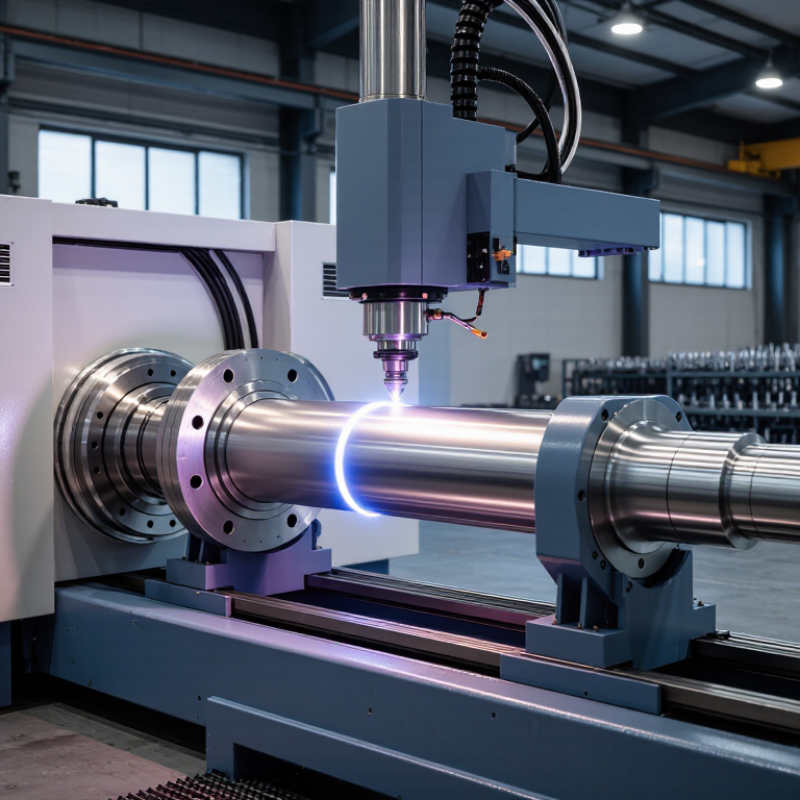
Laser Quenching Machines: Technology and Industrial Applications
Laser Quenching Machines: Technology and Industrial Applications
Laser quenching hardens selected metal surfaces without heating an entire component. A focused beam raises the surface to its austenitizing range; heat then flows into the cooler substrate, forming a hardened layer. No spray bath is usually needed. This can reduce distortion and keep nearby features relatively cool. Small details matter: beam power, scan speed, spot size, alloy composition, and surface condition all affect the result.
Applications include gears, shafts, bearing seats, and injection-mold tooling. On a steel shaft, for example, a controlled scan can harden a wear-prone track while leaving the core tougher. The process is not a universal shortcut. Complex corners may receive uneven energy, and the required case depth depends on part geometry and material. A production trial should verify hardness and depth at several points, not just the easiest spot.
The broader market is growing. Allied Market Research estimated the global laser-processing market at $13.4 billion in 2020 and projected $29.4 billion by 2030, across applications beyond quenching. That figure signals wider investment in laser-based manufacturing, not demand for quenching machines alone. A less glamorous point: stable fixturing and repeatable inspection often matter as much as laser power. A bright, uniform scan is not proof of a uniform hardened layer.
China Top 10 Laser Quenching Machine Manufacturers - Laser Quenching Machines: Technology and Industrial Applications
The table compares ten representative, non-branded machine and application profiles. It does not identify individual companies or rank manufacturers. Specifications vary by system design, material, and process requirements; the entries describe common industrial practices rather than verified specifications of specific suppliers.
| No. | Machine or system profile | Typical laser and motion setup | Suitable components | Process purpose and practical considerations |
|---|---|---|---|---|
| 1 | Flexible fiber-laser hardening cell | Fiber laser, CNC or robot-guided optics, programmable scanning path | Gears, shafts, dies, and selected wear surfaces | Provides localized surface hardening while limiting heating of surrounding areas. Requires process development for each material and geometry. |
| 2 | Robot-mounted laser hardening system | Laser head mounted on an industrial robot, with coordinated path control | Large or three-dimensional parts, such as dies and complex machine components | Robot motion can reach varied surfaces and contours. Part position, robot accuracy, and consistent stand-off distance affect process repeatability. |
| 3 | CNC gantry hardening machine | Fixed laser head with multi-axis worktable or gantry motion | Large flat, curved, or regularly shaped components | Useful for programmed treatment of defined tracks and areas. Fixturing and the planned scan sequence help maintain uniform coverage. |
| 4 | Rotary-axis hardening system | Laser optics combined with a powered rotary axis and synchronized motion | Shafts, rollers, cylindrical surfaces, and selected gear features | Supports circumferential or track-based treatment. Rotation speed and laser travel must be coordinated to achieve consistent heating. |
| 5 | Gear-tooth hardening configuration | Focused laser with a programmed scan path or specialized beam-shaping optics | Gear teeth and other localized contact surfaces | Enables selective treatment of wear-critical areas. Tooth geometry, alloy, and the desired hardened pattern determine the process route. |
| 6 | Die and mold surface hardening system | Multi-axis CNC or robotic motion with path-planning capability | Forging dies, forming tools, and mold surfaces | Can harden selected regions without treating the entire tool. Complex contours require careful path planning and control of overlap between tracks. |
| 7 | Heavy-component hardening cell | High-power laser configuration with a large work envelope and robust fixtures | Large rollers, industrial shafts, and heavy machinery components | Designed for larger parts and longer treatment paths. Thermal management, component handling, and uniform motion are key production considerations. |
| 8 | Precision localized hardening workstation | CNC-controlled optics, compact work area, and accurately positioned beam delivery | Small components, narrow tracks, and localized wear zones | Supports treatment of defined areas with limited overall heat input. Accurate positioning and repeatable fixturing are important. |
| 9 | Automated production-line hardening cell | Laser source integrated with part handling, fixtures, and production controls | Repeat-production components in automotive and general manufacturing | Automation can reduce manual handling and support consistent cycle routines. Integration, inspection, and process monitoring are needed for production control. |
| 10 | Custom-engineered laser hardening system | Application-specific combination of laser source, optics, axes, and controls | Non-standard components or specialized production requirements | Configuration is selected around part geometry, material, throughput, and the required hardened area. Feasibility should be confirmed through process trials. |