What Is a Floor Mounted Jib Crane?

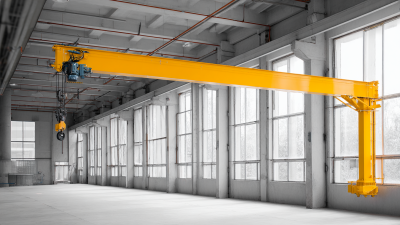
A Floor Mounted Jib Crane is a compact lifting system fixed directly to a reinforced floor or foundation. Its vertical mast supports a horizontal boom, called the jib. A trolley travels along this boom, moving loads across a limited working area. This simple arrangement can transform a crowded workshop, warehouse, or maintenance bay. It places lifting power close to the task, reducing unnecessary manual handling and equipment movement.

“Good lifting begins with understanding the load path, not merely choosing a larger crane,” says crane safety engineer Mark A. Johnson. That principle deserves attention. The crane’s capacity depends on more than its advertised lifting limit. Foundation strength, anchor bolts, jib length, outreach, trolley position, and operating speed all influence performance. A 500-kilogram load near the mast behaves differently from the same load at full outreach. Small details matter.

This guide explains what a Floor Mounted Jib Crane is, how it operates, and where it provides practical value. It also examines installation, load control, inspection routines, and common design mistakes. Real workplaces are rarely perfect. Floors may crack. Operators may misread a load chart. Space can disappear overnight. A thoughtful design anticipates these problems.

Not every application needs a jib crane. Some require a bridge crane, forklift, or lifting table instead. Choosing correctly requires measured information, competent engineering, and disciplined operation. Safety is built into the decision. It is not added afterward.

What Is a Floor Mounted Jib Crane?

Definition and Basic Purpose of a Floor-Mounted Jib Crane

What Is a Floor Mounted Jib Crane?

A floor-mounted jib crane is a fixed lifting device anchored directly to a concrete floor. Its vertical mast supports a horizontal boom, called a jib. A trolley travels along this boom, while a hoist raises and lowers the load. The crane usually rotates through a limited arc, often 180 or 360 degrees. Its basic purpose is simple: move materials safely within a defined workstation.

Unlike a bridge crane, it does not require a building-wide runway. It can serve machine stations, loading areas, assembly cells, and maintenance bays. A 2024 MHI Annual Industry Report found that 83% of supply-chain professionals planned to increase technology investment. That trend supports localized lifting equipment. Still, automation does not remove judgment. A crane’s capacity depends on boom length, rotation, foundation strength, and load position. The specification is rarely perfect on the first visit.

Tips: Confirm the floor’s structural capacity before installation. Check the maximum rated load, duty cycle, hook height, and operating radius. ASME B30.17 and applicable workplace rules provide useful inspection and operation guidance. Keep people outside the suspended-load area. Train operators to watch for side pulling, sudden swinging, and overloaded hooks. Record inspections clearly. Small details matter.

Main Components and Structural Design

A floor-mounted jib crane is a lifting system fixed directly to a concrete floor. Its main structure includes a steel base, vertical mast, rotating boom, hoist trolley, and lifting hoist. The base transfers the full load into the foundation. The mast carries vertical forces and bending moments. The boom reaches into the working area. Meanwhile, the trolley moves the load along the boom.

Structural design depends on more than lifting capacity. Engineers check the rated load, boom length, rotation angle, and working frequency. Anchor bolts must resist tension and shear forces. A reinforced base plate helps distribute pressure across the floor. Gussets around the mast can reduce local deformation. The slewing bearing or pivot assembly must rotate smoothly under load. Small alignment errors may create noticeable wear.

During installation, the floor condition deserves close attention. Cracks, weak concrete, or hidden reinforcement can change the design decision. The load path should be clear from the hook to the foundation. Engineers also consider wind exposure, impact forces, trolley braking, and accidental side loading. Deflection matters too. Excessive boom movement can make positioning difficult.

I have seen designs that looked strong but ignored maintenance access. That mistake becomes expensive later. A practical design leaves room for inspections, bolt checks, lubrication, and safe operator visibility. Not every calculation predicts real behavior perfectly. Field measurements still deserve respect.

How a Floor-Mounted Jib Crane Operates

What Is a Floor Mounted Jib Crane?

A floor-mounted jib crane is a lifting system fixed directly to a reinforced floor. Its vertical mast supports a horizontal boom, trolley, and hoist. Unlike an overhead crane, it serves a defined work area without requiring roof rails. The crane may handle motors, steel parts, dies, or containers near a machine station.

How a Floor-Mounted Jib Crane Operates

The lifting cycle begins when an operator checks the load weight and attachment point. The hoist then raises the load vertically, usually by chain or wire rope. A trolley moves along the boom to position the load closer to, or farther from, the mast. The boom rotates around the mast, allowing the load to swing across the service area. Smooth movement matters. Sudden starts can create dangerous load swing and extra stress on the floor anchors.

The operator should keep the load low while rotating and avoid pulling sideways. In practice, a clean-looking setup can hide poor anchor installation or an uneven floor. That assumption needs testing. Pre-use checks should cover bolts, welds, hooks, brakes, controls, and unusual noise. The rated capacity must account for the load radius, not only the hook’s maximum rating. Only trained personnel should operate the crane.

Tips: Mark the rotation zone on the floor. Confirm the anchor design with a qualified engineer. Watch the hook, not just the control pendant. Stop if the load begins to twist. Mistakes are easier to correct before lifting.

Types and Configuration Options

What Is a Floor Mounted Jib Crane?

Types and Configuration Options

A floor mounted jib crane is fixed to a concrete foundation or structural base. Its vertical mast supports a horizontal boom, called the jib. The boom rotates around the mast, moving loads across a defined work area. In a fabrication bay, it may lift a 500-kilogram motor from a pallet and position it beside a workbench. The main advantage is controlled handling without occupying overhead runway space.

Freestanding jib cranes offer broad rotation, often up to 360 degrees. Mast-style models can provide greater lifting height when the building structure allows it. Articulating jibs use a hinged boom for reaching around corners or machinery. Wall-mounted options save floor space, but they depend heavily on wall strength and suitable anchoring. Each type solves a different movement problem. One choice rarely fits every station.

Configuration decisions should begin with rated capacity, working radius, lift height, and rotation limits. A longer boom increases coverage, but it also increases foundation forces. That detail is easy to underestimate. Select a hoist that matches the load, lifting speed, control method, and duty cycle. Electric chain hoists suit many indoor tasks, while wire-rope hoists may support heavier or higher lifts. Check floor thickness, anchor layout, sway, clearance, and emergency access before installation. Environmental factors matter too, including dust, moisture, temperature, and corrosive materials. A wider reach is not always better. In practice, a compact crane often gives operators safer visibility and more accurate placement. Final sizing should be reviewed by a qualified engineer using actual load data.

Applications, Load Capacity, and Safety Considerations

What Is a Floor Mounted Jib Crane? Applications, Load Capacity, and Safety Considerations

A floor mounted jib crane is anchored directly to a reinforced concrete floor. Its horizontal boom rotates around a vertical mast, giving operators controlled lifting coverage without a full overhead runway. Workshops use it for dies, pumps, motors, and pallets near production lines. It saves space. It also limits movement to its rated outreach.

Load capacity depends on more than the hoist rating. A 500-kilogram load at a four-meter reach creates 2,000 kilogram-meters of bending moment before dynamic effects. Anchor bolts, concrete strength, boom deflection, rotation speed, and side pulling all matter.

The rated capacity should be checked against the manufacturer’s load chart and the site’s structural assessment. Capacity is not an educated guess. A common mistake is selecting a larger hoist while ignoring the foundation.

Safety controls need practical discipline. The U.S. Occupational Safety and Health Administration requires rated loads to be marked and supports regular crane inspection under applicable rules, including OSHA 1910.179. Its crane safety guidance also highlights struck-by and electrical hazards.

The Bureau of Labor Statistics recorded 5,283 fatal work injuries in 2023, according to its Census of Fatal Occupational Injuries report; that figure covers all industries, not jib cranes specifically.

Operators should inspect hooks, chains, brakes, welds, and anchors before use. Never side-pull. Never stand beneath a suspended load. In practice, inspection records can be incomplete, so supervisors should verify them rather than assume compliance.