
China Top Ceiling Dehumidifier Suppliers How to Choose?
Choosing a Ceiling Dehumidifier supplier in China takes more than comparing prices. A low quotation may look attractive, but it tells you little about moisture-removal performance, noise, controls, or after-sales support. HVAC sourcing consultant Lin Wei offers this practical rule: “Trust the supplier that can document performance and service—not just promise both.” Treat that as a buying principle, and verify it against supplier records.
Start with the space itself. A hotel corridor, a basement plant room, and a compact office have different humidity loads and installation limits. Ask suppliers for capacity data, operating conditions, dimensions, power requirements, and sound levels. Request drawings showing how the ceiling unit connects to ductwork, drainage, and controls. A neat product photo is not enough.
Then examine the supplier’s evidence. Look for consistent technical documents, clear warranty terms, sample inspection options, and a named contact for troubleshooting. Ask how the company checks units before shipment. If answers are vague, pause. That may be a warning, though not proof of poor quality. Verify relevant certifications for your destination market with the issuing body, rather than relying on a logo in a brochure.
A careful shortlist beats a rushed order. Compare two or three factories using the same checklist, and request written answers. Check references where possible. This takes time. It also exposes gaps early. Some buyers focus too heavily on unit price; I would not ignore it, but service access and stable specifications matter after installation. A Ceiling Dehumidifier is a building system component, not just a box on a quotation.
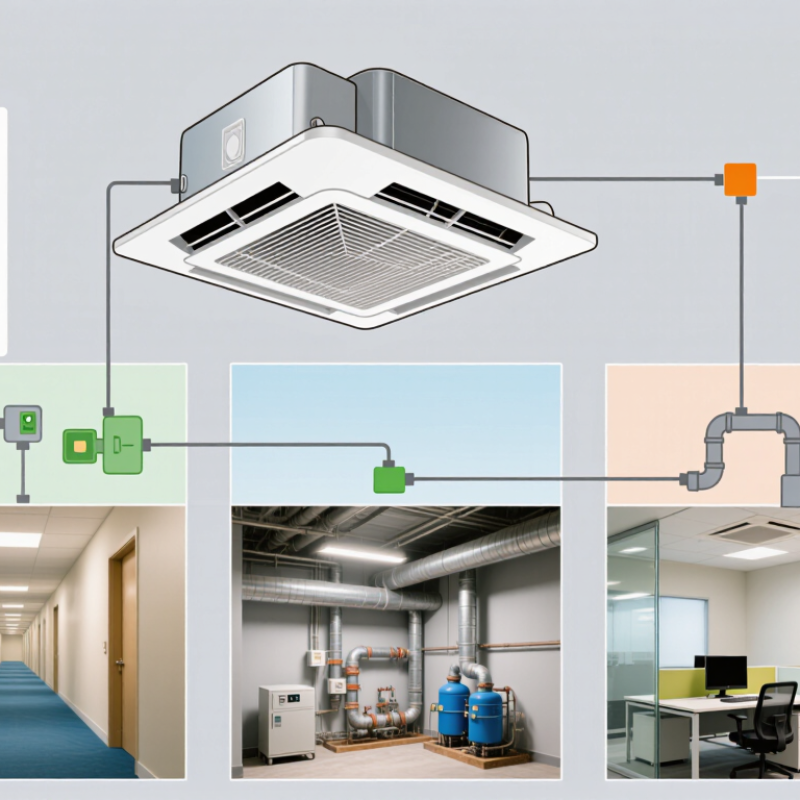
Understand Your Ceiling Dehumidification Requirements
Before comparing China’s top ceiling dehumidifier suppliers, define the space and its moisture load. Measure floor area, ceiling height, operating hours, and typical humidity; a tall room can hold far more humid air than its footprint suggests. The U.S. Environmental Protection Agency recommends keeping indoor relative humidity below 60%, ideally between 30% and 50%. Treat that as a useful reference, not a complete design specification. ASHRAE’s Handbook—HVAC Applications discusses moisture sources such as outdoor air, occupants, and building activities. Count them, too.
Look closely at when and where moisture appears. A poolside hall, a storage room, and a busy production area need different capacities, even at the same room size. Record door openings, fresh-air supply, wet processes, and seasonal peak conditions. Check ceiling clearance, return-air paths, drain access, and filter servicing before choosing a unit. Details matter.
A single humidity reading can mislead. Place a calibrated hygrometer near the occupied zone and compare readings across operating hours. If condensation appears on cold ducts or high windows, investigate the surface temperature and airflow, not just the displayed RH. A quick sizing rule feels convenient, but it may miss ventilation and process loads. I would verify the load calculation with a qualified HVAC professional and request capacity data at the expected temperature and humidity—not just a headline rating.
Identify Key Features of Ceiling-Mounted Dehumidifiers
Ceiling-mounted dehumidifiers need to match the room’s moisture load, not just its floor area. Check extraction capacity under the stated test conditions; output can fall in cooler spaces. The U.S. Department of Energy’s dehumidifier test procedure reports energy factor in liters per kilowatt-hour, helping buyers compare moisture removal with electricity use. Also inspect airflow, operating temperature range, and defrost control. A unit installed above a kitchen or laundry area should handle warm, humid air without frequent shutdowns.
Drainage and maintenance matter overhead. Look for a continuous-drain connection, a washable filter, and clear access to the condensate tray. Confirm the ceiling void has room for servicing and that the outlet will not drip onto lighting or stored items. The U.S. Environmental Protection Agency recommends keeping indoor relative humidity below 60%, ideally between 30% and 50%. A built-in humidistat can help maintain that range, though its sensor may read differently from a separate room hygrometer.
Tips: Before choosing, measure humidity at several points over a few damp days. Compare energy factors only when test conditions match. Check noise ratings and the specified clearance around the unit; a tight ceiling cavity can restrict airflow. Small details are easy to overlook. I would still verify drainage access before approving the installation.
Choosing a Ceiling-Mounted Dehumidifier: Indoor RH Target
A built-in humidistat should help maintain the recommended indoor relative humidity range.
The U.S. EPA recommends keeping indoor relative humidity below 60%, ideally between 30% and 50%. When comparing ceiling-mounted models, also check moisture-removal capacity for the space, continuous-drain options, low-temperature performance, operating noise, and filter and service access. The chart shows EPA guidance, not a product performance rating. Source: U.S. EPA.
Assess Chinese Suppliers’ Experience and Production Quality
A reliable ceiling dehumidifier supplier should be able to explain how long it has made similar equipment and which markets it serves. Ask for production history, team experience, and examples of comparable ceiling-mounted units. Specific answers matter. A polished catalog alone does not show whether a factory can maintain consistent output. Request a sample unit and check its housing, drain connections, wiring layout, and finish. Small details count.
Assess the production process, not just the final product. Ask how workers inspect coils, fans, electrical connections, and drainage before shipment. Useful evidence may include inspection records, test procedures, and clear descriptions of how defects are handled. If possible, review the assembly area or arrange a live production walkthrough. Notice whether components are stored neatly and workstations are organized. These clues are not proof by themselves, but they can prompt better questions. One easy detail to overlook is spare-parts availability; it deserves a direct conversation.
Tips: Compare the same model specifications across suppliers. Ask what each performance figure measures, and request test conditions in writing. Check lead times against actual production capacity. If an answer feels vague, ask again with a concrete example. That may feel awkward. Still, it is better than discovering gaps after ordering.
Compare Certifications, Customization, Pricing, and Support
When comparing China-based ceiling dehumidifier suppliers, check certificates against the exact model you plan to buy. A factory certificate alone does not prove that a unit’s electrical safety or performance has been independently tested. Ask for current test reports, rated capacity, and operating conditions. The U.S. EPA’s A Brief Guide to Mold, Moisture and Your Home recommends keeping indoor relative humidity below 60%, ideally between 30% and 50%. Use that range as a reference, then confirm the unit can maintain suitable humidity in your actual room conditions.
Customization should fit the ceiling, not just the quotation. Share the room size, ceiling void depth, drainage route, power supply, and expected occupancy. Request a drawing showing service access and condensate piping. Small detail, big signal. A low-profile unit may look neat but leave too little space for filter changes. I find this easy to overlook when comparing specification sheets.
Compare total cost, including installation, controls, filters, spare parts, and warranty service. Ask for itemized pricing and written lead times. Confirm who handles troubleshooting and how quickly replacement parts can ship. A low purchase price can become expensive if a drain pump fails and support is slow. Supplier responses are not always perfect; unclear answers about noise, airflow, or testing deserve a follow-up before ordering.
Verify Supplier Reliability Before Making Your Choice
When comparing China’s ceiling dehumidifier suppliers, reliability is more than a polished catalogue. Ask for the rated moisture removal, operating temperature range, airflow, and noise level. Request a recent test report for the exact model and configuration. A general certificate may not answer specific performance questions. Details matter.
Check whether the supplier can explain installation clearances, condensate drainage, filter replacement, and ceiling access. Ask for the warranty terms, spare-parts list, and a realistic lead-time schedule in writing. Then contact recent customers with similar room sizes and humidity conditions. Ask how service issues were handled, not just whether the equipment arrived on time. Ask for proof.
A video call from the factory can help you see production and inspection steps, but it cannot verify everything. Compare quotations line by line, including packaging and after-sales support. If technical answers remain vague or prices shift repeatedly, pause and clarify. A low quote can be persuasive; on reflection, price alone is a poor reliability test. Consider a small trial order and inspect the delivered unit before committing to larger volumes.
| Evaluation Area | What to Verify | Evidence to Request | Practical Verification |
|---|---|---|---|
| Business identity and operating history | Confirm the legal entity, registered business scope, operating address, and whether the supplier is a manufacturer, trading company, or both. | Current business registration details, registered address, export contact information, and a clear description of the supplier’s role in production. | Check registration information through appropriate official channels. Compare the legal entity on quotations, contracts, invoices, and payment instructions. |
| Product capacity and performance | Check moisture-removal capacity, airflow, operating temperature and humidity range, and the test conditions used for published performance figures. | Model-specific datasheets, operating manuals, test reports, and a written explanation of the temperature and relative humidity used in capacity testing. | Compare like-for-like test conditions. Do not compare capacity figures without checking their stated conditions and units. |
| Ceiling installation and servicing | Confirm the unit is designed for the intended ceiling or suspended installation, with suitable dimensions, mounting arrangements, service access, and condensate drainage. | Installation drawings, mounting details, clearance requirements, drain connection information, and maintenance instructions. | Review drawings with the project installer. Check access for filter cleaning and servicing, and confirm how condensate is routed and managed. |
| Electrical and control compatibility | Verify supply voltage and frequency, rated current, control options, protection features, and compatibility with the installation location and local requirements. | Wiring diagram, nameplate specifications, control-system documentation, and model-specific electrical test records where applicable. | Have a qualified electrical professional compare the unit’s specifications with the destination market and project requirements. |
| Safety and regulatory documentation | Determine which safety, electromagnetic compatibility, and other requirements apply in the destination market. Check that documents cover the exact model and configuration. | Applicable declarations, certificates, test reports, certificate numbers, issuing-body details, and model lists. | Verify documents with the issuing body or its official database where available. A certificate should not be assumed to cover every model or market. |
| Quality management and production controls | Ask how incoming components, assembly, inspections, and finished-product testing are controlled. Distinguish a quality-management-system certificate from product approval. | Quality procedures, sample inspection records, production test checklists, and any current quality-management-system certificate with its scope. | Arrange a remote or independent factory audit when order value or risk warrants it. Confirm the audited site is the site responsible for production. |
| Sample and order consistency | Check whether the production unit will match the approved sample in model, components, controls, finish, and documented performance. | A signed specification sheet, approved sample record, bill-of-materials change process, and pre-shipment inspection options. | Record agreed specifications in the purchase contract. Use an agreed inspection checklist before shipment for significant orders. |
| Warranty and after-sales support | Clarify warranty duration, coverage, exclusions, spare-parts availability, response process, and responsibility for shipping or labor costs. | Written warranty terms, troubleshooting guidance, spare-parts list, and a defined process for handling claims. | Ensure warranty terms appear in the contract or order documents rather than relying only on verbal assurances. |
| Commercial terms and shipment readiness | Review quotation validity, payment milestones, production lead time, packaging, shipping terms, and responsibility for export documents. | Itemized quotation, pro forma invoice, packaging details, proposed delivery schedule, and a list of shipping documents to be provided. | Make the contract identify the exact model, quantity, specifications, delivery terms, and documents required before final payment. |
| Overall supplier decision | Assess technical fit, verifiable documentation, communication clarity, inspection access, and willingness to put commitments in writing. | A completed supplier comparison checklist with outstanding questions and supporting documents recorded for each candidate. | Shortlist suppliers that meet project requirements and can substantiate their claims. Resolve missing or inconsistent evidence before placing an order. |
