
How to Choose a Submersible Drainage Pump?
Choosing a Submersible Drainage Pump starts with the water, not the product label. Is it clean rainwater, muddy runoff, or water carrying small debris? That difference affects the impeller, intake design, and risk of clogging. Measure the pumping height and distance too. A pump that looks powerful on a box may deliver far less water once it pushes against a long hose or a high discharge point.
For an illustrative expert voice, fictional pump-selection specialist Alex Rowan offers this reminder: “Choose for the water and the duty point, not the biggest number on the label.” This is an original line for this draft, not a verified quotation. It points to a practical truth: flow rate and head must be considered together. Check the pump’s performance curve, solids-handling limit, discharge size, and duty rating. Then compare those details with the site conditions and expected operating time.
Small details matter. A narrow hose, a float switch trapped against a wall, or grit packed around the intake can change performance. That is easy to overlook. This guide explains how to match pump specifications to real drainage needs, assess installation and maintenance requirements, and avoid common selection mistakes. It cannot replace checking the manufacturer’s instructions; those details vary by model. Sometimes the right choice is less obvious than it seems.
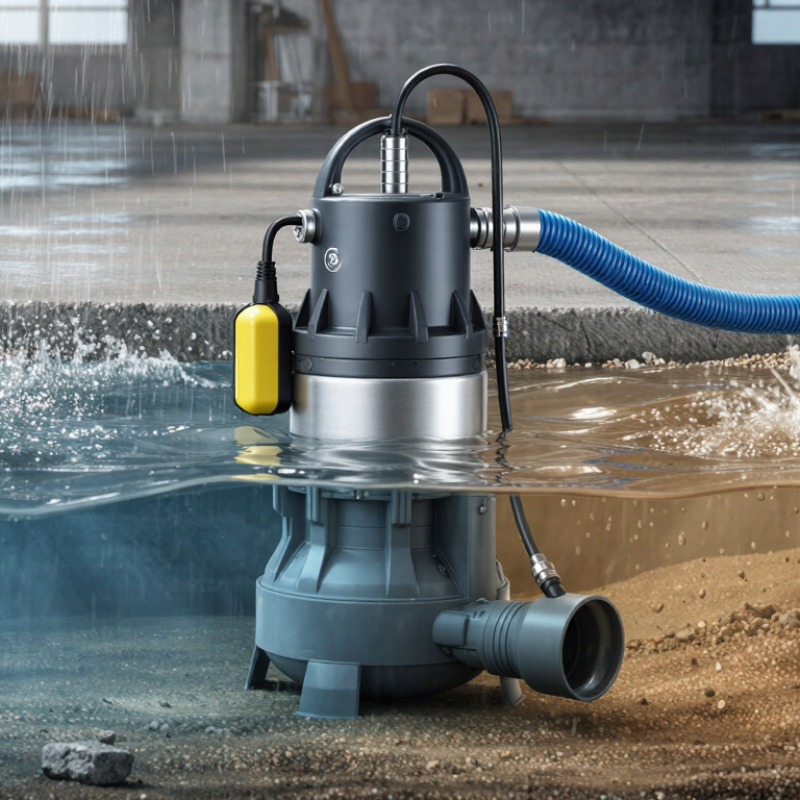
Identify the Water Type and Drainage Conditions
The water type is the best starting point when choosing a submersible drainage pump. Clear water from a basement leak behaves differently from muddy runoff carrying grit, leaves, or small stones. Check the pump’s specified maximum particle size and whether it is intended for clean water or water with solids. A narrow inlet can clog quickly when debris is present. Small details matter.
Look at where the water collects and where it must go. Measure the vertical lift from the pump to the discharge point, then consider the hose length, bends, and outlet size. These factors create resistance and can reduce flow. A pump’s advertised flow rate may be measured under easier conditions than yours. A low doorway, long hose, or rising discharge line can change the result.
Also consider how often the pump will run and what the water may contain. Sump water, rainwater, and construction-site water can differ in sediment and temperature. If the liquid contains unusual chemicals, confirm material compatibility with the pump supplier rather than guessing. Check that the float switch can move freely in the space. It is easy to overlook a cramped pit.
Finally, keep the electrical connection dry and follow the unit’s installation instructions. If drainage conditions change after heavy rain, reassess the setup instead of assuming yesterday’s choice still fits.
Choose a Pump Design for the Intended Application
How to Choose a Submersible Drainage Pump?
Choose a pump design for the intended application, not just the lowest price or highest flow-rate figure. For clear water in a basement sump, a compact pump with a screened intake may be suitable. Water carrying leaves, grit, or small debris needs a wider passage to reduce clogging. Check the manufacturer’s stated solids-handling capacity; appearance alone is not a reliable guide. A pump that handles clean water well may struggle in a muddy pit.
Estimate the vertical lift from the water surface to the discharge outlet, then account for hose length, bends, and the required flow. More resistance can reduce actual output. For frequent operation, consider a durable design and a float switch that matches the pit’s size. Intermittent emergency use may call for a different balance of portability and running time. Conditions change. I have seen a seemingly sensible choice disappoint when sediment built up around its intake, so allow room for inspection and cleaning.
Tips: Measure the pit and discharge route before buying. Match the pump’s solids rating to the debris you expect, and check its duty cycle and temperature limits. Keep the intake clear, and test the float switch with a small amount of water. Don’t guess.
Calculate the Required Flow Rate and Pumping Head
Inflow estimate
Estimate inflow before comparing pump models. The USGS Water Science School gives a useful conversion: one inch of rain over one acre equals about 27,154 gallons. For a quarter-acre area receiving one inch per hour, that is roughly 113 gallons per minute. Use the actual drainage area and local design rainfall, not an annual average. Then account for groundwater seepage, runoff entering through doors, and water already stored in the pit. Small details matter. A sudden storm can exceed a daily average.
Pump performance
Next, calculate total dynamic head: vertical lift from the water surface to the discharge point, plus friction through pipes, elbows, valves, and fittings. The U.S. Department of Energy’s Improving Pumping System Performance guide stresses matching pump performance to system requirements; check the pump curve at your calculated flow and head together. A long, narrow discharge hose can reduce delivered flow, even when the nameplate rating looks generous. Real sites are messier. Measure the actual lift and pipe route where possible, then allow a practical margin for uncertainty without blindly oversizing. If the required duty point falls outside the pump curve, choose a different pump or revise the piping.
Check Power, Materials, and Safety Features
Match the pump’s voltage, phase, and rated power to the available supply. Then check its flow curve against the required lift; a pump may move water quickly at floor level but deliver much less at greater height. Leave room for sediment and small debris if the pit is dirty. Check the curve, too.
Choose materials for the water, not just the price. Cast iron tolerates rough handling, while stainless steel resists corrosion; reinforced polymers can be lighter but vary in durability. The U.S. Department of Energy’s Improving Pumping System Performance sourcebook reports that pumping systems use 25–50% of energy in some industrial facilities. That figure is not specific to household drainage, but it shows why avoiding an oversized pump can matter. The trade-off is rarely neat.
Check for thermal overload protection, a reliable float switch, and a properly sealed cable entry. IEC 60529 classifies protection against water ingress, but an IP rating alone does not tell you the permitted immersion depth or operating duration; verify those details in the pump documentation. Use a grounded, protected supply suited to wet locations, and keep plugs and connections out of standing water. A float can snag against a pit wall. Test it before relying on unattended pumping. I would recheck it after cleaning, too.
Confirm Installation, Maintenance, and Service Requirements
When choosing a submersible drainage pump, confirm how it will be installed and serviced—not only its flow rate. Measure the pit, discharge route, operating water level, and available lifting clearance. Check whether the pump can pass the debris expected on site; stringy material can snag an impeller even when the pit looks clean. A real installation is rarely as tidy as a drawing.
The U.S. Department of Energy’s Improving Pumping System Performance sourcebook reports that pumps use nearly 20% of global electricity, and 25–50% of energy in some industrial plants. These broad figures are not specific to drainage pumps, but they underline why duty cycles and efficient operation matter. Ask whether routine checks can be done without entering the pit. Confirm access to the float switch, intake screen, cable, seals, and wear parts, plus local service response times. Keep it practical. A lifting chain and safe electrical isolation point can save awkward work later. I would also confirm the maintenance interval against actual water conditions; a clean-water schedule may not fit a muddy sump. That detail is easy to miss.
How to Choose a Submersible Drainage Pump? — Confirm Installation, Maintenance, and Service Requirements
| Selection Dimension | What to Confirm | Practical Guidance | Why It Matters |
|---|---|---|---|
| Liquid and solids | Water type, temperature, acidity or alkalinity, and the size and amount of solids. | Match wetted materials and the pump’s permitted solids passage to the liquid. Drainage water with grit or debris may need a pump designed for solids handling. | Unsuitable materials or blocked passages can cause rapid wear, corrosion, or loss of flow. |
| Required flow rate | How much water must be removed and how quickly. | Estimate the inflow or required drainage rate, then check the pump performance curve at the actual system head rather than relying on the maximum flow figure alone. | Flow decreases as total head and pipe resistance increase. |
| Total dynamic head | Vertical lift plus friction losses in the pipe, fittings, valves, and outlet. | Measure from the pumping water level to the discharge point, then account for pipe length, diameter, bends, and fittings. Keep the duty point within the pump’s operating range. | An underestimated head can leave the pump delivering too little water or no useful flow. |
| Installation location | Sump or pit dimensions, access for removal, floor condition, and risk of flooding. | Confirm the pump fits with room for the float switch to move freely. Use a stable base or approved guide-rail arrangement where appropriate. | Restricted movement, unstable placement, or poor access can interfere with operation and servicing. |
| Water level controls | Start and stop levels, minimum submergence, and the risk of dry running. | Check the manufacturer’s required operating depth and float-switch clearances. For automatic operation, verify that the switch cannot snag on the pit wall or pipework. | Incorrect control settings may cause frequent cycling, dry running, or failure to start before water overflows. |
| Discharge pipework | Pipe diameter, discharge route, non-return valve, isolation valve, and outlet position. | Size the pipe to the pump connection and required flow. Install valves in accessible locations and support the pipe so its weight is not carried by the pump connection. | Excessive restriction, backflow, or pipe strain can reduce performance and complicate maintenance. |
| Electrical supply and protection | Voltage, phase, frequency, current, cable length, earthing, and site electrical requirements. | Confirm the supply matches the pump nameplate. Have a qualified electrician provide suitable circuit protection and residual-current protection where required by local codes. | Incorrect supply or inadequate protection creates electrical and equipment hazards, especially in wet areas. |
| Duty cycle and pump capacity | Expected operating hours, starts per hour, and whether operation is continuous or intermittent. | Choose a pump rated for the intended duty and check permitted starts per hour. For critical drainage, assess whether a standby pump or alarm is needed. | Frequent starts or duty beyond the rating can overheat the motor and shorten service life. |
| Routine maintenance | Inspection frequency, cleaning access, wear parts, and safe isolation procedure. | Plan to isolate power before inspection, clear debris from the intake, check the float switch and cable, and inspect valves and pipework according to the operating manual. | Regular checks help identify blockage, wear, leaks, and control problems before a drainage failure. |
| Service and spare parts | Availability of qualified repair support, replacement parts, documentation, and warranty terms. | Before purchase, confirm local service access, parts availability, repair turnaround expectations, and the procedure for obtaining technical support. | Clear service arrangements reduce downtime and help keep the pump maintainable over its working life. |
| Commissioning checks | Correct rotation for three-phase models, leak-free connections, control response, and actual discharge performance. | Follow the pump instructions and site safety rules. Test operation with water, verify start and stop levels, and check for unusual noise, vibration, or leakage. | A commissioning test confirms that the installed system—not just the pump specification—works as intended. |
