How to Choose the Best Static Pile Driver in 2026?
Choosing a Static Pile Driver in 2026 is not just a matter of comparing rated force or purchase price. Each site brings different soil conditions, access limits, pile dimensions, and noise expectations. A machine suited to an open, level project may struggle near existing buildings or beneath low overhead lines. Small details matter. This guide explains how to compare equipment with real job requirements, using measurable specifications rather than sales claims alone. Check the rated pressing force, clamp range, pile compatibility, operating weight, transport dimensions, and power requirements against manufacturer documentation. Soil investigation reports and trial installation data can help establish whether a proposed system fits the ground. Estimates are not guarantees.
Operational details matter just as much. Review hydraulic performance, control layout, maintenance access, spare-parts availability, and the supplier’s service response. Ask how the machine handles the pile types and working conditions expected on your project. Proof matters. Request technical records, references from comparable work, and a clear explanation of any stated capacity. There is no universal winner. A compact machine may simplify transport but have limits on pile size or pressing capacity. A larger model may offer more capability while demanding extra space and careful logistics. That trade-off deserves thought. Before choosing, compare the total operating needs—not only the headline specification—and have qualified professionals confirm site suitability. The right decision depends on evidence, conditions, and the work ahead.
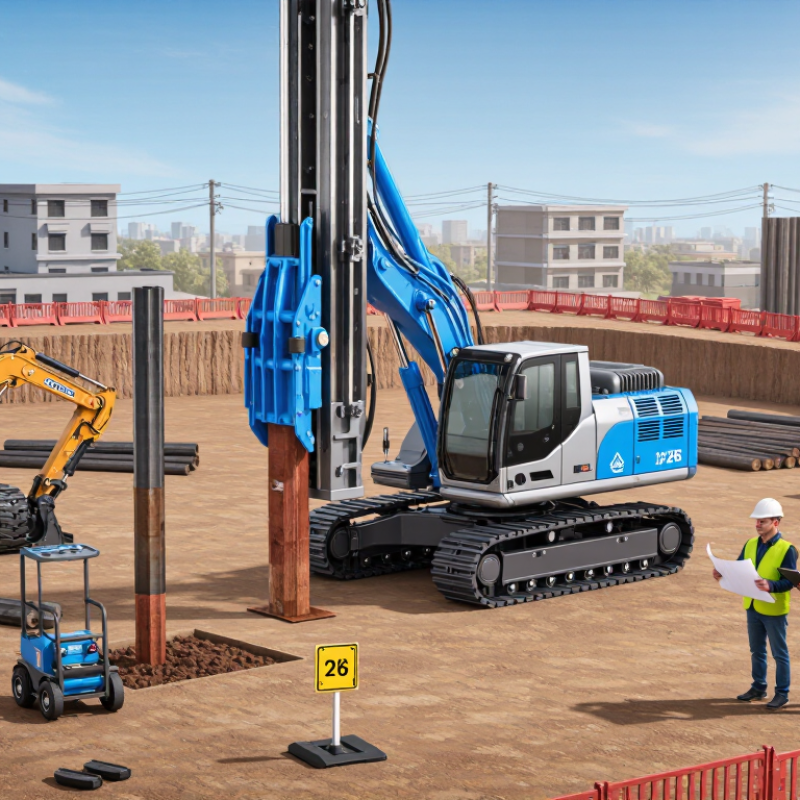
What a Static Pile Driver Does and Where It Fits
A static pile driver installs piles by pressing them into the ground with sustained hydraulic force rather than repeated hammer blows. Its reaction system uses previously installed piles or a counterweight to resist that force. The machine grips each pile, advances it in controlled stages, and monitors penetration and resistance. No impact blows. This quieter method can reduce vibration and airborne noise near occupied buildings, sensitive equipment, or historic structures. It does not eliminate ground movement, however; soil displacement and nearby utilities still need careful assessment.
Static pressing is most suitable where access is constrained, noise limits matter, and ground conditions allow steady penetration. It is often considered for urban foundations, building extensions, and sites where vibration monitoring is important. Before selecting a unit, the site team should review soil records, pile type, required depth, reaction capacity, headroom, and working-platform strength. A refusal reading is useful, but it is not a complete soil report. Dense layers, obstructions, or weak reaction piles can slow work or require another installation method. The trade-off is easy to miss: compact equipment may still need a substantial reaction arrangement and clear handling space. Selection depends on matching force, geometry, ground conditions, and the monitoring plan.
Which Project Conditions Define Your Equipment Requirements?
Start with the ground, not the machine’s headline capacity. A static pile driver presses piles into soil without impact, so ground resistance and nearby structures matter greatly. Review geotechnical logs, groundwater levels, fill depth, and buried obstructions before comparing equipment. A thin crust over soft clay can mislead. It may support access tracks but still allow settlement under the rig.
Then map the site: available working width, overhead clearance, access-road bearing capacity, and distance to existing foundations. On a narrow urban plot, a compact frame may fit where a larger machine cannot turn. Yet smaller equipment is not automatically suitable. Check required pressing force, pile dimensions, and planned installation depth against verified soil data. Allow room for pile delivery and safe repositioning, not just the machine footprint. This is easy to miss.
Production targets also shape selection. Count piles per shift, but account for setup, pile splicing, spoil handling, and interruptions from neighboring work. Noise-sensitive sites often favor static installation, though hydraulic power units and handling still create noise and vibration. Ask for operating limits and measured data from comparable ground conditions. Estimates are not guarantees. If the soil report is sparse, arrange further investigation before choosing a machine; assumptions can become expensive once the rig arrives.
How to Compare Capacity, Clamp Range, and Operating Reach
Choose a static pile driver by matching three limits to the actual pile plan: pressing capacity, clamp range, and operating reach. The Global Infrastructure Hub’s 2017 Global Infrastructure Outlook estimated $94 trillion in global infrastructure investment needs through 2040, with a $15 trillion funding gap. That broad forecast signals sustained construction demand, but it cannot tell you which machine fits a specific site.
Start with capacity. Compare the machine’s rated pressing force with the expected soil resistance and pile design, then confirm assumptions with a geotechnical engineer. FHWA’s 2016 Design and Construction of Driven Pile Foundations explains why soil conditions and field verification matter; rated force alone is not a reliable selection rule. Check clamp range against every pile section, including any planned change in diameter or shape. A clamp that grips only the first section is a costly surprise.
Reach matters too. Measure the working radius and clearance around the pile line, then account for overhead obstructions, mats, and repositioning space. Ask suppliers for capacity at the intended configuration, not just the maximum figure on a brochure. Bring one typical pile layout to the comparison meeting. Small details matter. I would still recheck reach after mobilization: site plans rarely capture every tight corner.
Which 2026 Power, Mobility, and Safety Features Matter?
For a 2026 static pile driver, match power to the pile material, dimensions, and expected ground resistance. Compare rated pressing force, hydraulic output, and cycle time under realistic conditions—not just peak figures. A quieter electric system may suit noise-sensitive sites, but check available site power and charging or cable arrangements. Diesel units can offer more independence, though fuel use and exhaust controls deserve close attention. Specifications rarely tell the whole story.
Mobility matters when access is tight. Check transport width, machine weight, turning clearance, and ground-bearing pressure before delivery. On soft or uneven ground, a compact machine can still need careful setup. Safety features worth checking include guarded pinch points, clear emergency stops, overload monitoring, stable clamping, and alarms that operators can hear above site noise. Ask for the operating and maintenance procedures, and confirm that controls are understandable from the working position. A feature is only useful if crews can use it consistently.
Tips: Request a site-specific demonstration with representative piles and ground conditions. Watch setup time, movement between pile locations, and recovery after a stop. Check the ground. Compare maintenance access and spare-part lead times, too. A polished demonstration may not reveal awkward daily tasks, so ask operators what they would change.
How to Assess Total Cost, Service Support, and Supplier Reliability
How to Choose the Best Static Pile Driver in 2026?
How to Assess Total Cost, Service Support, and Supplier Reliability
A static pile driver’s purchase price is only the starting point. Compare transport, site setup, power requirements, tooling, routine maintenance, and expected resale value. Ask for a written estimate that separates these costs. Small charges add up. Check whether the machine suits your pile sizes and ground conditions; an oversized unit can raise operating costs without improving daily output. Downtime matters, too. Even a short delay can affect crews, equipment rentals, and project schedules.
Tips: Request a sample maintenance schedule and the current price and lead time for common wear parts. Ask who handles commissioning, operator training, and urgent service calls. Get response times in writing, then confirm that local technicians and spare parts are actually available. Ask for references from projects with similar soil and pile requirements, and verify delivery commitments before scheduling site work.
Supplier reliability is more than a polished proposal. Review warranty exclusions, service responsibilities, parts availability, and technical documentation. If possible, inspect a working machine and speak with its operator about setup and support. Compare promises with evidence, such as service records and delivery references. A neat checklist will not catch everything, and I would leave room for uncertainty. But clear answers—and consistent follow-through—make cost comparisons far more useful.