
7 Tips for Choosing the Right Spunlace Machine?
Choosing the right Spunlace Machine can shape fabric quality, operating costs, and production stability for years. The decision deserves more than a comparison of machine prices. It requires practical attention to fiber type, web formation, water pressure, line speed, energy use, and maintenance access.
Dr. Seshadri Ramkumar, a respected nonwovens researcher, has noted, “Nonwovens are engineered materials, not simply fabrics.” That view matters here. A machine designed for viscose may not perform equally well with cotton, polyester, or recycled fibers. Small differences can appear quickly. Uneven bonding may create weak patches, rough surfaces, or visible streaks after drying. Production teams should request trial runs using their actual fiber blend and target basis weight.
This guide presents seven useful tips for evaluating a Spunlace Machine. It considers hydraulic design, nozzle configuration, filtration, drying efficiency, automation, supplier support, and total ownership cost. The cheapest quotation may hide expensive water treatment or difficult cleaning work. That mistake is common. A careful buyer should inspect replacement-part availability, operator training, and service response times before signing an agreement. Specifications still matter, but factory evidence matters more. Even experienced teams can overlook noise levels, floor space, or access around pumps. Those details may seem minor during installation. They become important during a night-shift repair. The strongest choice is not always the fastest machine. It is the machine that consistently produces the required fabric, with manageable resource use and dependable technical support.
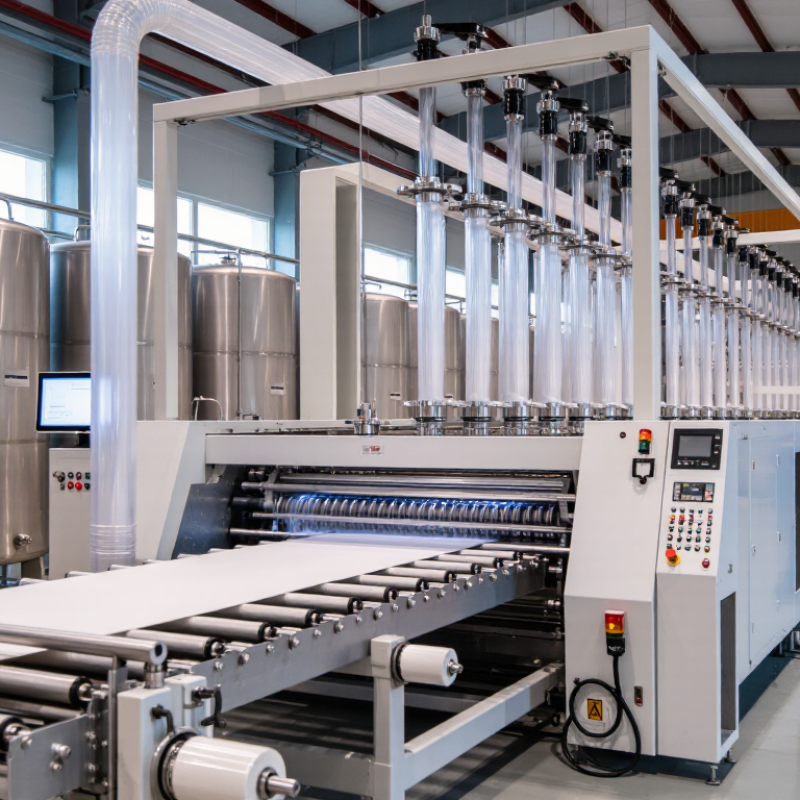
Define Your Product Requirements and Production Goals
Choosing the right spunlace machine begins with a clear definition of your product, not its advertised speed. Decide the target fabric weight, fiber blend, width, strength, softness, and surface appearance. A lightweight facial sheet may need different water-jet pressure than a durable industrial wipe. Write these requirements in measurable terms.
Your production goal should include both capacity and consistency. Estimate daily output, operating hours, acceptable waste, and future product changes. Check whether the machine can handle your planned fiber types, such as viscose, polyester, cotton, or recycled fibers. Ask for trial data using materials close to yours. Laboratory results can look excellent, yet factory performance may vary.
Water quality matters.
So does energy use.
During equipment evaluation, inspect the filtration system, nozzle maintenance, web-forming stability, drying control, and access for cleaning. Request records for uptime, maintenance intervals, and quality deviations from comparable installations. A high-speed line is not automatically the best investment if it creates uneven bonding or frequent stoppages. Consider operator training and spare-part availability before signing a purchase agreement.
A practical mistake is chasing maximum output too early. Start with the product specification, then match the machine configuration to your actual market demand. Leave room for improvement. Your first production plan may be incomplete, especially after real testing. Frequently review fabric samples, water consumption, and roll defects with both operators and quality staff.
Compare Machine Types, Materials, and Processing Capabilities
Choosing the right spunlace machine starts with the material, not the advertised speed. Tip 1: Define your fibers clearly. Viscose, polyester, cotton, and blended fibers require different opening and web-forming settings. Check fiber length, fineness, moisture, and contamination risk. Tip 2: Compare machine types carefully. A carding line suits controlled staple-fiber webs, while crosslapping equipment supports thicker and more directional structures. Some systems combine both approaches, but greater flexibility can increase maintenance demands.
Tip 3: Match the machine to your target basis weight and width. A line designed for light wipes may struggle with heavier medical or filtration fabrics. Tip 4: Examine hydroentangling capability. Review water pressure ranges, jet-strip arrangements, nozzle cleaning, and energy consumption. Higher pressure is not always better. Excessive force can damage delicate fibers or create uneven bonding. Tip 5: Ask for trial data using your actual fiber blend. Supplier samples can look excellent, yet production behavior may change with humidity, web tension, or recycled content.
Tip 6: Evaluate drying and water-treatment systems as part of the machine. Stable moisture control affects softness, strength, and winding quality. Tip 7: Inspect access points, sensor accuracy, spare-part availability, and operator training. These details often decide whether a line runs smoothly after installation. A specification sheet can mislead. I would also compare three trial batches, because one successful roll is not reliable evidence. Leave room for improvement; even a well-designed process may need slower speeds during early production.
7 Tips for Choosing the Right Spunlace Machine
Compare machine configurations, fiber materials, and processing capabilities before selecting a spunlace production line.
The chart uses an indicative 1–5 suitability index based on common industry applications: 1 means limited suitability and 5 means strong suitability. Parallel-carded lines are commonly used for uniform webs, crosslapped lines for higher loft and strength, and airlaid or hybrid systems for pulp-containing absorbent products. Actual results depend on fiber length, blend ratio, basis weight, water pressure, line speed, and bonding configuration.
Evaluate Production Speed, Capacity, and Energy Efficiency
Check Machine Quality, Maintenance Needs, and Supplier Support
Choosing a spunlace machine starts with evidence, not attractive photographs. Ask for recent test results from machines producing similar fiber blends and target fabric weights. Check web uniformity, tensile strength, moisture control, and production speed under realistic conditions. A trial should run long enough to reveal unstable water pressure or uneven fiber distribution. During a factory visit, listen for abnormal pump noise and inspect welds, guards, wiring, and emergency controls. Small details often reveal manufacturing discipline.
Maintenance needs can quietly reshape production costs. Ask how often operators must clean filters, replace nozzles, lubricate bearings, and calibrate sensors. Components should be easy to reach without dismantling half the line. Confirm whether manuals include diagrams, fault codes, torque settings, and recommended inspection intervals. I once focused too heavily on output speed and underestimated cleaning time. That mistake reduced practical capacity. Request a maintenance demonstration, not only a sales presentation.
Supplier support should be specific and measurable. Ask about technician response times, remote diagnostics, operator training, spare-part availability, and installation assistance. Get these details in writing. Speak with existing users about delayed parts, repeated faults, and training quality. A reliable supplier will discuss limitations instead of promising perfect performance. Ask what happens when the machine misses its stated GSM tolerance. That answer may reveal more than a polished brochure. Test the communication process before purchase by sending technical questions and checking how clearly the team responds.
Review Total Costs, Safety Features, and Future Expansion Options
Choosing a spunlace machine requires more than comparing purchase prices. Price is not cost. Include installation, water treatment, energy, labor, spare parts, training, waste, and planned downtime. The U.S. Department of Energy reports that compressed-air systems can lose 20–30% of their input energy through leaks and poor controls. Spunlace plants should therefore request verified utility data, not optimistic estimates. Smithers’ 2024 nonwovens market study forecasts growth from approximately 54 billion dollars in 2023 to more than 67 billion dollars by 2028. Rising demand may justify higher efficiency today, but only after a realistic production model.
Safety deserves equal financial attention. Check fixed guards, door interlocks, emergency stops, lockout points, noise control, and accessible maintenance zones. Confirm conformity with ISO 12100 risk-assessment principles and ISO 13849-1 safety-control requirements. Ask for test records. Do not accept vague promises. A machine that reduces accidents can also reduce stoppages, though this benefit is difficult to price precisely. Small leaks matter. So do poor sensor locations. Review operator reach, wet-floor drainage, fiber accumulation, and cleaning time during a live factory visit.
Future expansion should be designed into the frame, controls, utilities, and floor plan. Leave capacity for wider working widths, extra pumps, automated roll handling, and digital monitoring. Modular upgrades can protect cash flow, but compatibility is never guaranteed. Require interface drawings and lifecycle support in writing. A spreadsheet can still lie. Recalculate total cost using conservative uptime, higher energy prices, and slower ramp-up assumptions.
7 Tips for Choosing the Right Spunlace Machine? - Review Total Costs, Safety Features, and Future Expansion Options
| Tip | Evaluation Dimension | Practical Benchmark or Data Point | Cost Impact to Review | Safety and Compliance Check | Future Expansion Question |
|---|---|---|---|---|---|
| 1. Match the machine to the target product | Fiber type, basis weight, web width, and end use | Typical spunlace products may cover approximately 30–120 g/m², depending on the fiber blend, web structure, and application. Common working widths range from about 1.6 m to 5.0 m. | An oversized line increases building, utility, and maintenance costs; an undersized line may require early replacement or parallel equipment. | Confirm guarding around carding, web-forming, entangling, and conveying zones. Require accessible emergency stops and documented risk assessment. | Can the line run a wider web, higher basis weight, recycled fibers, or biodegradable fibers without replacing the main forming section? |
| 2. Compare total cost of ownership | Capital cost, utilities, labor, consumables, maintenance, and downtime | A useful five-year model should include purchase, installation, commissioning, spare parts, water treatment, electricity, labor, waste, and planned shutdowns—not only the equipment quotation. | For water-jet entanglement, pumping and water-treatment demand can be significant. Request measured utility consumption at the intended production rate rather than nameplate estimates. | Check whether pressure vessels, pumps, electrical panels, and machine guarding comply with the regulations applicable in the installation country. | Is there enough space and utility capacity for additional drying, wastewater treatment, automation, or a second production module? |
| 3. Verify real production performance | Rated speed, saleable output, uptime, and quality consistency | Evaluate output using saleable kilograms per hour, not only line speed. A production trial should record speed, basis weight, moisture, defects, startup waste, and stoppage time. | A line operating at 85% of nominal speed with stable quality may deliver more usable output than a faster line with frequent breaks and high waste. | Confirm safe access for cleaning and threading. Interlocked doors should stop hazardous motion before operators can reach moving components. | Can the control system store recipes and monitor key variables such as line speed, pressure, moisture, basis weight, and fault history? |
| 4. Examine water and energy efficiency | High-pressure water circuit, filtration, recycling, drying, and electrical load | A closed-loop water system can reduce fresh-water demand, but it requires filtration, water-quality control, sludge handling, and scheduled cleaning. Drying is often a major energy consumer. | Compare kWh per kilogram, fresh-water use per kilogram, wastewater volume, and heat-recovery potential under the same product conditions. | Include leak detection, pressure relief, lockout/tagout procedures, thermal protection, and safe chemical-handling provisions for water treatment. | Can additional filtration, heat recovery, variable-frequency drives, or higher-efficiency pumps be added without redesigning the entire utility system? |
| 5. Prioritize safety and maintainability | Operator protection, access, ergonomics, cleaning, and preventive maintenance | The equipment should provide clearly marked emergency stops, guarded nip points, safe platforms, adequate lighting, lockable isolation points, and documented maintenance intervals. | Designs that reduce cleaning time and improve access can lower labor costs and shorten planned downtime, even if their initial price is higher. | Request conformity documentation for applicable machinery, electrical, pressure, noise, and workplace-safety requirements. Verify that safety devices are tested during commissioning. | Will future modules use the same safety circuits, access standards, spare parts, and operator training system? |
| 6. Assess automation and technical support | Controls, data collection, remote diagnostics, training, and spare-parts support | At minimum, the line should provide alarm history, recipe management, trend data, and clear operating parameters. Critical spare-parts lead times should be documented in writing. | Budget for operator training, software updates, calibration, recommended spare parts, and service travel. These items can materially affect availability over five years. | Use controlled access for remote service, maintain audit logs, and separate safety-related controls from non-safety communication networks where required. | Can the system connect to plant monitoring software and support additional sensors, automatic inspection, or predictive-maintenance functions later? |
| 7. Plan for expansion and lifecycle flexibility | Modularity, upgrade paths, building layout, and long-term product strategy | Reserve space for service access, raw-material handling, finished-roll storage, utilities, wastewater treatment, and possible capacity expansion. A layout review should be completed before final purchase. | Modular equipment may cost more initially but can reduce the cost and production disruption of adding a second card, extra entangling section, wider rewinder, or improved drying unit. | Ensure future modules will not create blocked emergency exits, restricted evacuation routes, excessive noise exposure, or unsafe maintenance access. | Which components can be upgraded independently, and which limitations—frame width, pump capacity, controls, dryer size, or foundation—would require major reconstruction? |
Planning note: The benchmark values are general industry planning ranges and should be validated through a product trial, utility study, site survey, and applicable local safety regulations before purchase.
