
2026 Top Types of Titanium Dinner Plates for Buyers

A Titanium Dinner Plate can suit buyers who need lightweight tableware for travel, outdoor meals, or everyday use. In 2026, the right choice depends on more than a product label. Plate shape, capacity, rim design, surface finish, and construction all affect how it feels in hand and works at the table. Some models use simple, shallow forms; others add divided sections or deeper sides for different meals.

Small details matter. A narrow rim may make a plate easier to pack, while a wider edge can help contain sauces. Weight and diameter should match the intended setting, especially when plates will be carried in a compact kit. A smooth finish is easy to wipe, but visible marks may appear with regular use. Not every plate fits every routine.

For purchasing decisions, compare material descriptions and request clear product specifications. Check whether the item is described as commercially pure titanium or an alloy, and ask for supporting documentation when food-contact claims are important. Also review the stated dimensions, care instructions, packaging, and supplier consistency across samples. I would not treat “titanium” alone as a complete quality grade; that label can leave useful questions unanswered. A polished listing cannot show every small annoyance of daily use. This guide explores the main types of titanium dinner plates and the practical trade-offs buyers should weigh before choosing.
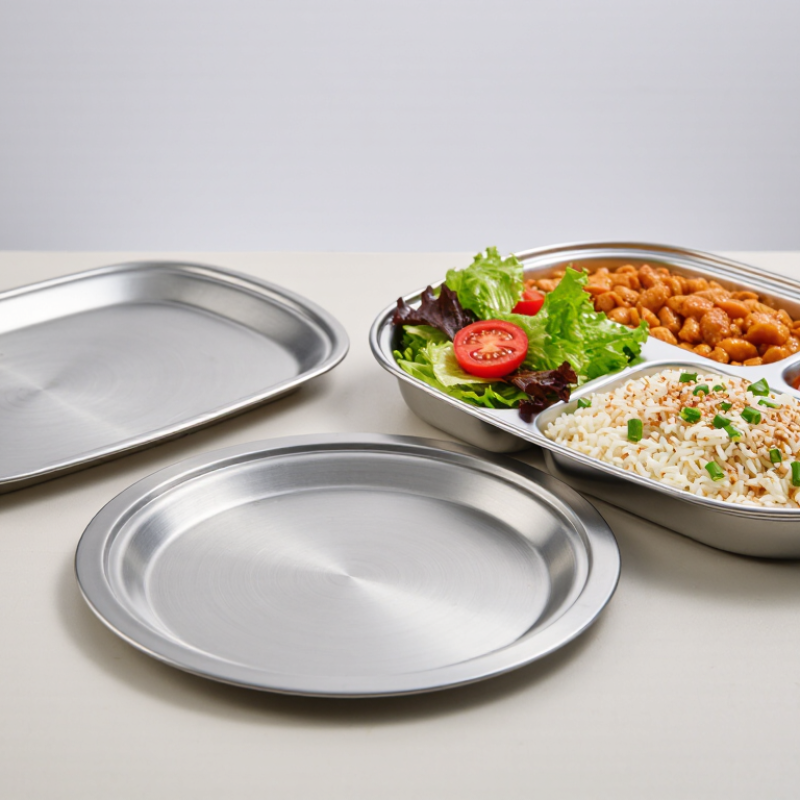
2026 Top Types of Titanium Dinner Plates for Buyers

What Titanium Dinner Plates Are and How They Are Made

A titanium dinner plate is a reusable eating surface made primarily from titanium. It is usually much lighter than a ceramic plate and does not have a glass-like glaze. Many designs use a shallow center and a slightly raised rim to help contain food. The surface may look matte or softly reflective. Not indestructible.

Production commonly begins with titanium sheet cut into circular blanks. The blank is pressed or formed into a plate shape, then its rim is rolled or smoothed to remove sharp edges. Workers may trim the outline and refine the surface with brushing or polishing. The finished piece is cleaned, and its shape and edges are checked. Details vary with the sheet thickness and forming method.

Material grade and construction matter. A plate made from thin sheet can flex more than a heavier one, even when both are titanium. Look for clear material information and inspect the rim for smoothness. A polished surface can show scratches with use; that is normal, not necessarily a defect. Appearance alone cannot confirm the titanium grade, so reliable product specifications are useful. It is easy to assume “titanium” means every plate is made the same way. It doesn’t.

Main Types of Titanium Dinner Plates by Design and Construction

Titanium dinner plates vary by shape and construction. A stamped, single-wall plate is the lightest and simplest type. Its shallow profile suits compact meal kits and everyday outdoor use, but food cools quickly. Check the rim: a smooth, rolled edge feels more comfortable and is less likely to bend than a sharp, unfinished edge.

Small details matter. A spun plate often has a gently curved basin and a more defined lip. That shape helps keep rice, sauce, or cut vegetables from sliding off when the plate is carried. However, a deep bowl-like profile may feel awkward for foods that need cutting.

Double-wall plates add stiffness and reduce direct heat transfer to the hands, though they are heavier and bulkier. The space between walls can also make cleaning or drying less straightforward if the design has gaps.

Compartment plates use raised dividers to separate foods; they work well for packed meals, but reduce usable flat area. Nesting plates save storage space when their rims and bases fit closely together.

I still find this trade-off easy to underestimate: a tight stack can be harder to separate with wet hands. Buyers should compare plate diameter, wall thickness, edge finish, and how securely several plates nest, rather than judging by weight alone.

Plate Shapes, Sizes, and Capacity Options

Titanium dinner plates come in round, square, and softly contoured shapes. Round plates suit everyday meals and pack neatly into many bags. Square plates can make better use of shelf space, though their corners may catch on soft packing material. A shallow raised rim helps keep rice, sauce, or cut fruit from sliding off. Small detail. The best shape depends on what you serve and how you carry it.

Common diameters range from about 6 inches for side portions to 10 inches or more for full meals. A compact plate may hold bread and a small serving, while a wider plate gives food room without stacking. Capacity is not determined by diameter alone. Rim height and the curve of the base matter, too. Two plates with matching measurements can hold noticeably different portions.

When comparing specifications, check both diameter and stated volume, if available. A deep plate may manage soup or saucy food better, but it can feel less convenient for flat meals. A broad, shallow plate is easier to serve from, yet spills more easily when carried. Measurements are useful, but they do not show how a plate feels in the hand. If possible, compare its depth and weight alongside the listed capacity.

Surface Finishes and Features Across Plate Types

Polished titanium plates have a bright, smooth face and wipe clean easily after rice, sauces, or fruit. They show fingerprints and fine scratches, though. Brushed finishes soften glare and disguise everyday marks, making them practical for frequent packing. Check the rim as well as the center; a rough edge can feel uncomfortable against the lips.

Bead-blasted plates have a matte, slightly textured surface that hides scuffs better than mirror finishes. That texture can hold oily residue, so inspect the plate after washing. Anodized titanium adds color through an altered surface oxide layer rather than a conventional paint layer. Color can vary with light and production, so photographs alone may mislead. Feel the edge. Finish matters there.

The Grand View Research Titanium Market Size report valued the global titanium market at about USD 27.3 billion in 2023 and projected 6.0% annual growth from 2024 to 2030. That broad market estimate is not dinnerware testing; buyers should not treat it as proof of plate durability. Ask suppliers for material-grade and finish details, then check for burrs, uneven coloring, and flex under gentle hand pressure. I would compare actual samples when possible. A tidy specification sheet cannot show how a plate feels in a damp hand.

How Buyers Can Compare Types for Different Uses

Titanium dinner plates vary by shape, weight, and construction, so match the type to the meal and setting. A shallow, lightweight plate suits hiking or compact travel kits, where every gram and centimetre matters. For family camping, a wider plate with a raised rim helps contain rice, sauce, or chopped vegetables on an uneven picnic table. Divided designs can keep foods separate, though their compartments may limit serving size. That matters outdoors.

Buyers should compare material details as well as shape. A plate made from commercially pure titanium may differ in stiffness and weight from a titanium alloy product. Check the stated material, surface finish, rim smoothness, and whether any coating is used. A brushed surface can show marks over time; that is not necessarily a performance problem, but it may bother buyers seeking a pristine finish. Also consider stackability, cleaning access, and whether the plate feels stable when set down. Small detail, big difference.

Tips: Check the plate’s diameter against your bowl or storage case before ordering. Ask for clear care instructions, especially if the product has a coating. For everyday dining, prioritize a comfortable rim and easy cleaning; for backpacking, choose a light, compact shape. I’d still handle a sample when possible—photos rarely reveal how a thin plate feels in the hand.

2026 Top Types of Titanium Dinner Plates for Buyers - How Buyers Can Compare Types for Different Uses

Plate Type or Option What It Is Suitable Uses Main Advantages Points to Consider What Buyers Should Check
Flat plate A shallow plate with a mostly level center and a modest rim. Everyday meals, sandwiches, salads, and foods that do not need much liquid containment. Simple to pack, store, and clean; the broad surface suits many foods. Less suitable for soup, sauces, or foods that roll easily. Check the usable serving area, rim shape, edge smoothness, and whether the plate stacks securely.
Rimmed plate A plate with a raised outer edge; rim height and width vary by design. Meals with dressing, grains, or small pieces of food; camping and picnic use. The rim can help keep food on the plate and makes handling easier. A wide rim reduces the flat area available for food. Compare the inner serving area with the overall diameter, and inspect the rim for sharp edges or hard-to-clean corners.
Deep plate or plate-bowl A plate with a deeper center than a conventional flat plate. Pasta, grain bowls, saucy dishes, and meals with a small amount of liquid. Contains food and juices better than a flat plate while retaining a broad opening. It is not necessarily a substitute for a dedicated soup bowl; depth and capacity differ by model. Check the stated dimensions and capacity, if provided, and confirm that the shape fits the intended storage system.
Divided plate A plate with raised sections that separate foods. Meals where separate portions or ingredients are preferred, including outdoor meals. Helps keep foods apart without requiring separate dishes. Compartments can limit the size of portions and may take longer to clean around their corners. Review the number and size of compartments, divider height, and whether the sections suit the planned menu.
Commercially pure titanium, Grade 1 A commercially pure titanium grade known for high formability and relatively low strength compared with other common commercially pure grades. Buyers prioritizing formability or a simple, lightweight plate design. Good formability can support shaping into different plate profiles. Strength and rigidity depend on thickness and construction; grade alone does not establish durability. Ask for the material grade, sheet thickness, finished dimensions, and evidence that the material specification applies to the product.
Commercially pure titanium, Grade 2 A widely used commercially pure titanium grade with higher strength than Grade 1. General-purpose plates where a balance of formability and strength is desired. A practical material option for formed products and a common grade in commercially pure titanium applications. It is still important to compare thickness and construction; grade does not determine plate weight or stiffness by itself. Verify the stated grade, thickness, edge finish, and product-care instructions.
Titanium alloy, Grade 5 (Ti-6Al-4V) A titanium alloy containing aluminum and vanadium; it is stronger than commercially pure titanium grades. Specialized designs where high strength is a priority. High strength relative to commercially pure titanium can allow strong components. It may be unnecessary for ordinary dinnerware, and buyers should not assume all titanium plates are made from this alloy. Confirm the exact alloy and evaluate whether its added strength justifies the cost and intended use.
Anodized titanium finish A surface treatment that creates color through an oxide layer; anodizing is a finish, not a separate titanium grade. Buyers seeking colored surfaces or easier visual identification of personal gear. Can add color without relying on a conventional paint layer for the color effect. Color and surface appearance can change with abrasion or wear; anodizing does not make the plate nonstick. Ask how the surface is finished, what care is recommended, and whether the seller provides food-contact information for the finished product.
Coated titanium plate A titanium plate with an applied surface coating; coating materials and processes vary. Buyers considering a specific surface property offered by the coating. Performance depends on the particular coating and its intended purpose. The coating may wear or scratch, and the word “titanium” alone does not describe the food-contact surface. Identify the coating material, care limits, abrasion guidance, and food-contact documentation before purchase.
Compare plate shape, material grade, thickness, finish, and care requirements separately. A grade or finish by itself does not establish a plate’s weight, capacity, durability, or suitability for a particular food-contact use.